Trumps 9 11 response resurfaces 25 years later and one evil comment leaves people stunned
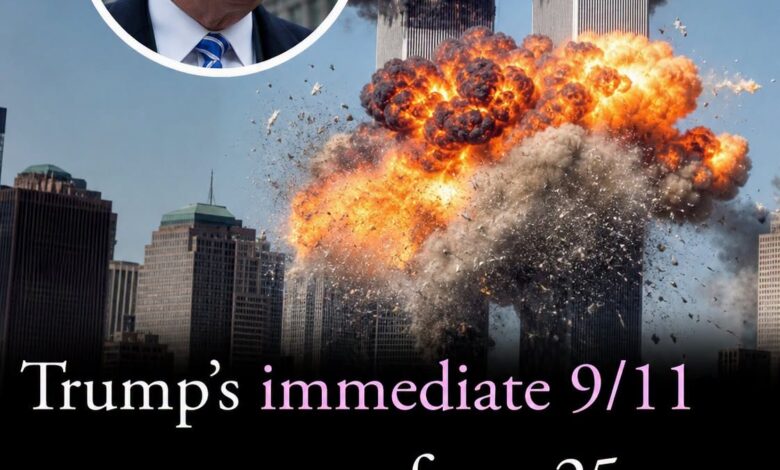
Trump’s 9/11 response resurfaces 25 years later and one ‘evil’ comment leaves people stunned
The cameras were still catching smoke when he said it. As New York bled and burned, Donald Trump brought up the height of his own building. Twenty-five years later, that moment is back — and it’s uglier than many remembered. Critics call it “evil,” defenders say it’s taken out of cont… Continues…
In the chaos of September 11, 2001, New Yorkers clung to radios and televisions, desperate for clarity, comfort, anything that resembled leadership. When Donald Trump appeared on local TV that day, he described explosions and horror like everyone else. But then, almost casually, he shifted to 40 Wall Street, noting that with the Twin Towers gone, his skyscraper was now the tallest downtown. The boast was not only factually wrong; for many, it felt morally off‑key, a jarring note of self-promotion while thousands were missing or dead.
The clip now circulates again as the nation prepares to mark 25 years since the attacks. It is replayed alongside his later claims of helping clear rubble, disputed by first responders, and his shifting comments about who bears responsibility for that day. For families who still visit the memorial, for firefighters who inhaled the dust, the resurfaced interview is more than a “gotcha” moment. It’s a reminder of what empathy looks like under pressure — and what it doesn’t.
The interview took place while lower Manhattan was still overwhelmed by smoke, fear, and uncertainty. Families were searching for relatives, emergency workers were moving toward danger, and television stations were trying to understand an attack whose scale was not yet clear. Against that background, the remark about 40 Wall Street sounded jarringly focused on personal status. Trump said the building had become the tallest in downtown Manhattan after the towers fell, although other buildings remained taller. The resurfaced recording has renewed debate because listeners judge not only whether the claim was accurate but why it was raised at that moment. Critics describe the comment as evidence of misplaced self-promotion during a national catastrophe. Supporters argue that an old interview can lose context when reduced to a short clip. The complete setting, however, remains central to the reaction. Thousands of people had been killed, first responders were entering unstable ruins, and the city was beginning years of grief and recovery. Later statements about helping at Ground Zero and about responsibility for the attacks have also been revisited and challenged. For survivors and families, these arguments are not abstract political theater. They concern how public figures spoke and acted while New York was experiencing one of its darkest days.
The renewed discussion also shows how historical memory changes when old broadcasts become instantly available online. A remark once heard live by a local audience can now be replayed by millions alongside photographs, survivor testimony, and official records. That wider context allows people to compare statements with what was happening across the city at the same hour. It also explains why the clip continues to provoke such a strong response after twenty five years. The argument is not simply about one incorrect claim concerning a building. It is about tone, judgment, and the priorities revealed when a public figure speaks during catastrophe. The anniversary has led many Americans to revisit interviews, emergency calls, and news coverage from that morning. Some material offers courage and solidarity. Other moments remain painful or unsettling. The Trump interview belongs to that larger archive, and its return ensures that the words will continue to be judged against the human scale of the attacks.