Nine People Killed in Devastating Collision Between Passenger Van and Truck on BR 251 in Brazil
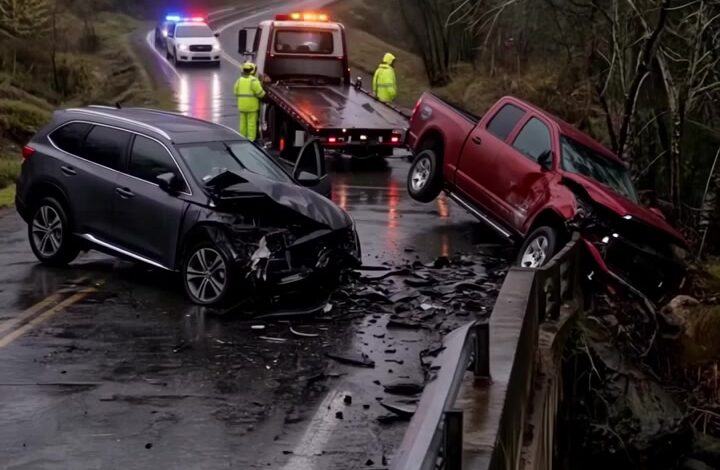
A devastating head-on collision between a passenger van and a heavy-haul truck near Grão Mogol, in northern Minas Gerais, Brazil, left nine people dead, including a child. The accident occurred on the evening of May 13, 2025, near kilometer 446 of BR-251, close to the rural community of Barrocão.
The van was reportedly carrying 17 people, many of them workers traveling a long distance. According to the initial account, nine occupants died, while eight others survived with injuries. The truck’s driver and passenger also received medical attention for minor injuries. The severe damage to both vehicles made the rescue operation especially challenging.
Firefighters, medical teams, highway police, and forensic specialists responded to the scene. Several passengers were trapped inside the wreckage, requiring rescue workers to use specialized equipment to reach them. BR-251 was temporarily closed in both directions while emergency crews carried out rescue and recovery operations.
Authorities began investigating the circumstances surrounding the collision, examining vehicle damage, road conditions, and other evidence. Although the initial account mentioned possible factors such as rain and visibility, the exact cause had not been established. The tragedy has renewed concerns about highway safety and the risks faced by people traveling long distances across Brazil.
The accident involved people traveling a long distance in one vehicle. The account places the crash near Barrocão, a rural community outside Grão Mogol. That location matters to the rescue and to the later investigation. Teams had to get to the scene, establish a safe working area on the highway and determine how to reach people in two badly damaged vehicles.
The initial numbers describe different groups involved in the collision. The van carried seventeen people. The report says nine of them died and the other eight were injured. The two people in the truck also received medical attention. Those figures explain why the number of injured people in the report is higher than the number of surviving van passengers.
Closing the road in both directions gave emergency workers space to attend to survivors and handle the recovery operation. A closure also affects travelers beyond the immediate scene. Until the people, vehicles and evidence can be accounted for, traffic has to wait or use another route. In a rural area, that interruption can reach people traveling between communities some distance from the crash site.
The investigation described by the source had a different purpose from the rescue. Responders had to act on the situation as they found it. Investigators would look at the condition and position of the vehicles, the roadway and any information that could establish how the collision occurred. Weather and visibility were mentioned among the circumstances to consider. The source did not report that investigators had reached a conclusion about either factor.
The account leaves two distinct parts of the story. One is the immediate loss of life and the injuries sustained by the people traveling that evening. The other is the work of establishing why two vehicles met head-on on BR-251. The first was already clear from the response at the scene. The second remained open as authorities gathered evidence and reviewed what happened near kilometer 446.