Passenger Ship Reel Shows a Vessel Listing in Rough Seas
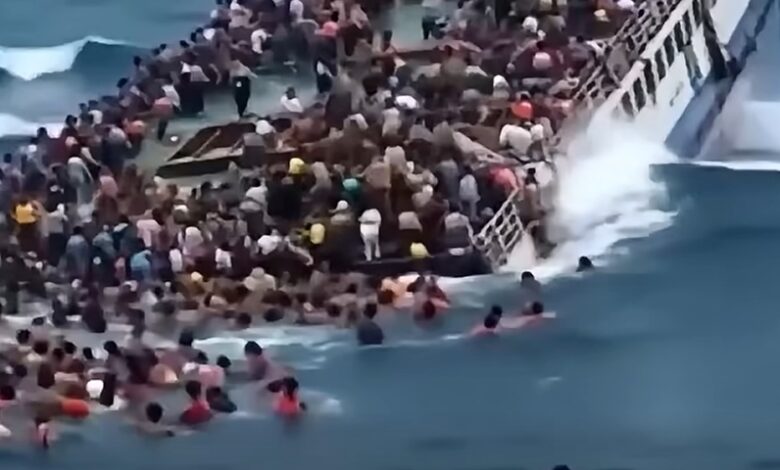
A terrifying scene unfolds on a rough, stormy sea as an overcrowded passenger ship appears dangerously close to capsizing. The vessel is tilted heavily to one side, sending hundreds of panicked passengers scrambling for anything they can hold onto as powerful waves crash against the hull.
Many people are packed tightly across the ship’s upper and lower decks, while others have already fallen or jumped into the turbulent water. Dozens of swimmers can be seen struggling to stay afloat, some holding onto each other or floating objects for support as they attempt to move away from the unstable vessel.
The ship continues to lean as waves pound its side, with water appearing to rise around the lower deck. The chaotic crowd has little room to move, and there are no clearly visible organized rescue boats or professional rescuers in the scene. The gray sky, rough blue water and lack of land nearby add to the sense of isolation and danger.
The footage presents what appears to be a desperate fight for survival at sea, with passengers both aboard the vessel and in the water facing rapidly changing conditions. The scene is described as an ongoing maritime emergency, though the location, identity of the vessel and circumstances behind the footage are not established by the description alone.
The accompanying caption uses urgent language, but the information supplied with the clip does not establish an independently verified sinking. No ship name, registration number, departure point, destination, or official rescue announcement accompanies the description. That absence matters because a dramatic image of a listing vessel can circulate separately from the circumstances in which it was recorded or created.
The visible scene is dominated by the contrast between the size of the vessel and the number of people crowded around it. The upper structure leans across the frame while the surrounding water remains rough. People appear both on the decks and in the sea, making the condition of the ship and the situation of those outside it the central elements of the footage.
However, appearances alone cannot establish how many people were aboard, whether the vessel actually sank, or what happened after the final frame. A claim about casualties would require evidence beyond this description. The same applies to any attempt to assign responsibility to a captain, ship operator, crew, or government authority. None of those parties is identified in the supplied account.
Short clips also leave important gaps in a sequence of events. They may begin after a problem has developed and end before assistance arrives. Camera position, editing, and the absence of an original publication record can make it difficult to understand scale and timing. Digitally created or altered footage adds another reason to distinguish a visual impression from a documented maritime incident.
For this reel, the most accurate account is therefore limited to the scene being presented: a passenger vessel appears heavily tilted in rough water, with a dense crowd on board and figures in the sea nearby. The location, date, identity of the vessel, authenticity of the footage, and eventual outcome remain unestablished in the material accompanying the post. The urgent caption should be read alongside those limits.