I Left My Wife Before Divorce And Found Her In A Hospital Hallway
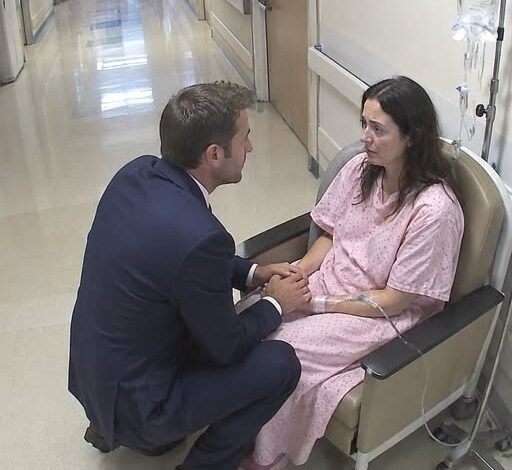
Dr. Keller told me I couldn’t go any farther, and Sophie agreed with him before I had a chance to ask why.
“Please stay where you are, Ethan,” she said.
I stopped beside the fourth floor nurses station, still holding the paper bag I’d brought from the lobby. Sophie stood several feet away in a hospital gown, with an IV stand beside her. She had been looking at Dr. Keller when he spoke, but now she was looking directly at me.
“What’s going on?” I asked.
Dr. Keller kept his voice even. “Sophie is here for testing. She needs some quiet and room to move without being crowded.”
“I understand that. I’m not trying to crowd her.”
Sophie raised her left hand, palm toward me, and I stopped talking.
“Then don’t,” she said.
I had spent two months telling myself that our divorce had been the kindest thing I could do for both of us. We had lost pregnancies, lost our way around each other, and reached a point where every conversation seemed to end with one of us hurting the other. I had called leaving a mercy.
Now I stood in a hospital hallway while my former wife asked me not to come closer.
I lowered the paper bag to the floor and reached for the medical file Dr. Keller had been carrying. He had offered it to Sophie, but she had not taken it. When I picked it up, the file slipped from my hands and landed open at my feet.
A page slid halfway out.
I bent down to gather it, and the date at the top caught my eye. The file had been opened six weeks before our divorce was finalized.
I read it again, then looked at Dr. Keller.
“Why is this dated before the divorce?”
He took a breath before answering. “That is part of Sophie’s medical history.”
“Six weeks before we signed the papers?”
Sophie reached for the file, but I held it out to her instead of turning another page.
“There’s a tumor,” she said.
The words were quiet. They were also plain enough that I couldn’t mistake them.
Andrew Collins Andrew Collins is a contributor who enjoys writing about everyday topics, people, and ideas that spark curiosity. His approach is simple and conversational, aiming to make stories easy to read and relatable. Outside of writing, Andrew follows current trends, enjoys long walks, and likes turning small observations into meaningful stories.
Andrew Collins is a contributor who enjoys writing about everyday topics, people, and ideas that spark curiosity. His approach is simple and conversational, aiming to make stories easy to read and relatable. Outside of writing, Andrew follows current trends, enjoys long walks, and likes turning small observations into meaningful stories.
I looked at her, then at the file in her hands. “A tumor?”
“Yes.”
“When did they find it?”
“After my last miscarriage.”
I started toward her, wanting to take the file, wanting to ask what the doctors had said and what she needed and how long she’d been coming here. Sophie lifted her left hand again.
“Don’t come closer.”
I stopped.
Dr. Keller moved a little nearer to Sophie, not touching her, but making it clear that he was there to help her if she needed it.
“She has been under care,” he said. “We are still working through the findings.”
“Is it serious?”
“That’s a question for the medical team to answer with the results in front of us.”
I looked at Sophie. “You knew?”
She nodded once.
The file was no longer in my hands. I had no right to take it back, and I knew that, but I had spent years being the person who could ask about her appointments, call her doctor, or sit beside her when she was afraid. I had lost that place without noticing how much it mattered until I tried to step into it again.
“Why didn’t you tell me?” I asked.
Sophie held the file against her side. “You didn’t let me do anything, and you chose to leave.”
I wanted to tell her that I had been grieving too. I wanted to explain that I had mistaken her quiet for acceptance, that I had thought she wanted the marriage to end as much as I did. I wanted to say that I had never meant for her to face something like this alone.
But none of those words would change the date on the page.
“I didn’t know,” I said.
“No,” Sophie replied. “You didn’t.”
Dr. Keller glanced toward the room behind her. “Sophie, would you like to go inside now?”
She nodded and began moving toward the door, keeping her right hand on the IV stand. I picked up the paper bag from the floor and stepped aside to give her space.
The door remained open as she passed through it.
I followed only as far as the threshold, and Dr. Keller turned back toward me.
“Please wait here,” he said.
“I just need a minute with her.”
“She needs to decide whether she wants that.”
I looked past him. Sophie had stopped near the bed, still holding the file. She did not turn around.
Dr. Keller stepped inside and left the door partly open behind him.
I stayed in the hallway, with the paper bag in my hand and the date from the file fixed in my mind. Six weeks before the divorce was finalized. Six weeks before I believed I had ended our shared pain.
The nurse who had been helping Sophie came out a few minutes later and asked me to move away from the doorway.
“She needs to settle in,” the nurse said.
“I understand.”
“Thank you.”
I moved toward the nurses station and set the bag on the counter. The nurse looked at it, then at me.
“Are you family?”
I opened my mouth, but the answer was no longer simple.
“I’m her ex-husband.”
The nurse checked something on her screen. “Then I need to ask Sophie what she’s comfortable with.”
“I know.”
She walked back toward Sophie’s room, and I watched her go.
I had thought the divorce ended my responsibility to Sophie. I had thought that because we were no longer married, I could stop asking what she needed and let her get on with her life. But the file had shown me that her life had not waited for the divorce to be finished.
I picked up the bag again and stood near the wall, leaving the nurses station clear.
When the nurse returned, she did not invite me inside.
“She’s resting,” she said. “You can wait here, but please don’t go into her room unless she asks.”
“All right.”
The nurse turned toward the door, and I followed her with my eyes until she disappeared inside.
I had no idea how long Sophie had been carrying the diagnosis, or how many appointments she had attended before I found her in that hallway. I only knew that the date in the file came before the day I signed away my place beside her.
Dr. Keller came out again and closed the door.
“She’s asked to be left alone for now,” he said.
I nodded.
He stood beside me for a moment, then spoke carefully. “Ethan, she is under considerable stress. Please don’t make her feel she has to manage your reaction as well as her own care.”
“I won’t.”
He returned to the room, and the door closed behind him.
I remained in the hallway, looking at the place where Sophie had stood with her IV stand. I had come to the hospital thinking I might offer help, perhaps bring her something useful, perhaps make an apology that would give us a way to speak again.
Instead, I had learned that the marriage had ended while a different crisis was already underway.
The paper bag rested against my leg. I hadn’t even told her what was inside.
I stood there until the nurse came back and asked me to step away from the room.
“She needs some time,” she said.
I moved down the hallway, but I didn’t leave.
The door had closed behind Sophie, and for the first time since our divorce, I understood that I was not waiting for her to forgive me.
I was waiting to find out whether she would let me stay.
The young nurse came after me before I reached the elevators.
“Mr. Ethan, could you come back for a moment?”
I turned around. She had Sophie’s chart tucked against her chest, and she looked as though she wished someone else had been assigned to speak with me.
“Is there something wrong?”
“I just need to clarify your relationship to the patient.”
“I’m her husband.”
The nurse glanced at the chart.
“You’re listed as her former husband.”
I had no answer ready for that. I had spent years introducing Sophie as my wife, and somehow two months of signed papers had made that word unusable in a hospital.
“We’re divorced,” I said. “But I’m here to help.”
“Are you family, because that changes what I can say or do here.”
“I’m not asking you to give me her medical information. I just want to know whether I can visit.”
“That depends on Sophie’s wishes. She’s allowed to decide who visits and who receives information.”
She turned the chart around long enough to check a line, then closed it again.
“She hasn’t listed you as someone authorized to receive updates.”
“Do you?”
There wasn’t any sharpness in her voice. That made the question harder.
“I think I’m beginning to.”
She explained that I could ask Sophie directly whether she wanted me involved, but the staff couldn’t treat our former marriage as permission. If Sophie wanted privacy, they had to respect it.
I nodded and stepped away from the counter. I had once been the person she called when she couldn’t sleep. Now a nurse needed to ask whether I belonged on a visitor list.
I started toward Sophie’s room, but Dr. Keller came out before I reached the door.
“Ethan, I’d like a word with you.”
He waited until I stopped beside him.
“She’s under considerable physical and emotional stress. Today’s tests have taken a great deal out of her.”
“Is she getting worse?”
“I can’t discuss her medical condition without her permission.”
“I wasn’t asking for her results. I was asking whether she’s all right.”
Dr. Keller considered that distinction.
“She’s being cared for. That’s what I can tell you.”
I looked at the door.
“She looked so calm.”
“People don’t always show what they’re carrying.”
He returned Sophie’s chart to the bedside and came back into the corridor.
“Please don’t make her feel she has to explain every decision she’s made. She needs room to concentrate on her care.”
“I won’t ask her to explain anything.”
“Then let her set the pace.”
I wanted to tell him that I had questions, dozens of them, but his warning was reasonable. Sophie had already spent enough time dealing with the consequences of my decisions.
“Can I sit with her later?”
“If she agrees.”
I thanked him, though I wasn’t sure what I was thanking him for. He had given me no information, no promise, and no special consideration. He had simply reminded me that Sophie was still the person whose wishes mattered.
At the elevator, I pressed the button and then changed my mind. I wasn’t ready to leave the floor, but I couldn’t keep standing outside her room expecting the door to open for me.
I went down to the lobby instead.
The security clerk looked up when I approached the desk.
“Can I help you?”
“I wanted to check the visitor rules. I’m visiting someone on the fourth floor.”
“Do you have a visitor pass?”
“Yes. I signed in earlier.”
He checked the screen.
“You’re still on the list for today.”
“Does that mean I can come and go?”
“Within the visiting rules, yes. The patient can also ask us to end a visit at any time.”
He handed back my pass. Beside the sign-in book lay a clinic appointment slip that someone had left behind. I wasn’t trying to read another person’s private information, but a handwritten note across the top caught my eye.
Transportation arranged.
Underneath it was a small box marked family assistance, with nothing written inside.
The clerk noticed where I was looking and moved the slip aside.
“Someone must have forgotten that.”
“Do people usually arrange rides through the clinic?”
“Sometimes. Some patients come with relatives. Others arrange transportation themselves.”
“Do you know whether Sophie has been using that service?”
He shook his head.
“I can’t discuss another patient’s arrangements.”
I stepped back from the counter.
The appointment slip had no name I could use, and it told me nothing about Sophie’s particular visits. Still, I couldn’t stop thinking about the empty box. I had assumed she had been going about her days, managing the divorce and the ordinary business of living alone.
I had pictured her making dinner, answering messages, and going to work. I had pictured her being sad sometimes, but managing.
I had not pictured her needing transportation to a medical appointment.
When I returned upstairs, Sophie’s nurse was coming out of the alcove near the elevators with a small stack of papers.
“Excuse me,” I said. “Could I ask you something?”
She stopped.
“If it’s about Sophie’s medical information, you’ll need her permission.”
“It’s about something else. How long has she been coming here?”
The nurse studied me for a moment.
“She’s been coming for appointments for some time.”
“Was she usually alone?”
“Not always.”
I waited, careful not to ask her to break a rule.
“Did she have someone bringing her home after appointments?”
“Sometimes she arranged a rideshare. Sometimes she had family help.”
“Was that recently?”
“She had more than one appointment where transportation needed to be arranged.”
The answer was small, but it took away another part of the story I’d been telling myself.
“Did she have trouble getting home?”
“Some days were harder than others. We make sure patients have a safe way home when they need it.”
I looked toward Sophie’s door.
“Did she ever ask for someone to stay with her?”
The nurse shifted the papers in her hand.
“She usually asked for what she needed. She didn’t ask us to contact anyone on her behalf.”
That was Sophie. Even when she needed something, she had found a way to ask for the exact amount and no more.
“Thank you,” I said.
The nurse nodded and started back toward the room.
I followed at a distance, then stopped when she turned into the corridor. I didn’t want Sophie to see me questioning staff about her. I had already made enough decisions on her behalf without asking.
The nurse returned a few minutes later.
“She’s resting now,” she told me. “You can ask her whether she’d like company, but please don’t keep trying if she says no.”
She studied my face, then softened her voice.
“She’s been very particular about keeping her appointments organized.”
“She always was.”
The nurse gave me a brief smile.
“Then you know she’s capable of being quite determined.”
“I do.”
I nearly smiled myself. It was the first ordinary thing anyone had said to me since I had seen Sophie in the hallway.
As the nurse walked away, I noticed a folded clinic appointment card sticking out of the pocket of her work folder. It had a handwritten reminder on it, but I couldn’t make out the words.
I didn’t ask to see it.
I went back toward Sophie’s room and stopped outside the door. Through the small opening, I could see her speaking with the nurse who had been helping her. Sophie was sitting upright, answering questions in that calm, clipped way she used whenever she didn’t want anyone worrying about her.
Then the nurse stepped out and closed the door.
I stayed where I was until Sophie called my name.
“Ethan?”
I entered only after she looked toward me.
“Hi.”
She gave a small nod.
“Did they tell you something?”
“No. They explained the visitor rules.”
“And?”
“I can visit if you want me to. They won’t give me medical updates unless you say that’s all right.”
“That’s correct.”
I pulled the chair away from the wall, but didn’t sit until she looked at it.
“You can sit there,” she said.
I sat.
For a few seconds neither of us spoke. Then she reached toward the short strands of hair near her left cheek and tucked them back.
“Did you have more questions?”
“I did, but I don’t think they’re all yours to answer today.”
She watched me carefully.
“What does that mean?”
“It means I don’t want to turn your hospital stay into an interview about the months before the divorce.”
She lowered her hand.
“That’s probably wise.”
I looked at the blanket across her knees.
“Have you been coming here by yourself?”
Her expression changed slightly, though her voice stayed even.
“Sometimes.”
“Have you had help getting home?”
“Okay.”
She seemed surprised that I didn’t ask for names or dates.
“Why are you asking?”
“Because I didn’t know how much you were handling.”
“You weren’t supposed to know everything.”
“I understand that now.”
She looked down at her hands.
“I didn’t want people making a fuss.”
“No, Ethan. You don’t.”
I accepted that without trying to correct her.
She shifted the blanket and reached for her water. I waited, then moved the glass closer when she nodded.
“Thank you,” she said.
I sat back.
“Is there anything you need today?”
“Not right now.”
She took a drink and set the glass down.
“I’ve got my appointments written down. I know where I need to be.”
“I believe you.”
“And I have people I can call.”
That last sentence stayed with me. She had people. I didn’t know who they were, how often they helped, or what she had needed from them when I was no longer the person she called.
“That’s good,” I said.
She gave me a small, tired look.
“You’re allowed to go see your friend, you know.”
I glanced toward the door.
“Mark?”
“Yes. I heard he was here.”
“He’s recovering.”
“I hope he’s doing well.”
“He is. He’d probably complain if I said otherwise.”
A faint smile crossed her face.
“That sounds like Mark.”
For a moment, we were talking about someone we both knew instead of the marriage that had ended between us. It wasn’t much, but I didn’t try to turn it into more.
I stood after a few minutes.
“I’ll let you rest.”
I reached the doorway, then heard her speak again.
“Ethan.”
I turned.
“Please don’t ask the nurses to tell you what I haven’t told you.”
She gave one small nod, and I left.
Outside, I stopped beside the nurses station. The young nurse was there again, checking the day’s visitor entries.
“Is there anything else I can do to make things easier for her?” I asked.
The nurse looked at me.
“That’s something Sophie would need to answer.”
“I know. I just wondered whether there was a way to help without getting in the way.”
She considered the question.
“Patients sometimes need help with ordinary arrangements. Rides, meals, keeping track of appointments. But you should ask her before arranging anything.”
“Has she had trouble getting rides?”
The nurse closed the folder.
“She has managed them.”
That wasn’t quite an answer, but it was all she could give me.
I thanked her and stepped away.
A woman came through the corridor carrying a brown leather purse, and the nurse greeted her as she approached Sophie’s room. The woman paused to ask whether Sophie was comfortable before going inside.
I didn’t recognize her, and I didn’t ask who she was.
I looked toward the visitor list again. My name was still there, but it was only a name. It didn’t tell anyone what I was allowed to know, and it certainly didn’t tell Sophie what she should let me do.
I took my phone from my pocket and opened the messages from Mark. He had sent me a short note earlier asking whether I was coming by.
I typed that I was on the fourth floor and would see him shortly.
Before sending it, I looked once more at Sophie’s closed door.
There were people in her life who had helped her while I was absent. Some had driven her to appointments. Some had helped her get home. I had no idea how many times she had needed that help, or how many times she had decided not to ask anyone.
I sent Mark the message and started toward his room.
Then I stopped at the elevators when I heard the nurse call after me.
“Ethan, one more thing.”
I turned back.
She held a small appointment card in her hand.
“This was left with Sophie’s things. She asked me to make sure it went back to her.”
I approached the desk.
The nurse looked at the card, then at me.
“Would you mind giving it to her if you go back in?”
I accepted it without turning it over.
The front had a clinic name and an appointment time written in Sophie’s handwriting. On the back, beneath a short list of dates, was another name.
I recognized it.
Claire.
Mark looked at me before I had reached the chair beside his bed.
“You’re carrying something worse than a bad afternoon,” he said.
I stopped with my hand on the chair back. Mark had spent most of his time recovering from chest surgery, and I had promised myself I would visit without making every conversation about Sophie. I had lasted less than a minute.
“Did you talk to her?” he asked.
Mark waited for me to sit down. He didn’t ask what she had told me. He watched me pull the chair closer, then said, “You look like you got caught doing something you thought nobody would notice.”
“I found out how long she’d been going through this.”
“How long?”
I told him about the date on the file. Mark’s face changed, but not in the way I expected. He didn’t look surprised. He looked tired of waiting for me to catch up.
“You knew,” I said.
“I knew she was having appointments.”
“Before the divorce?”
Mark pressed his right palm lightly over his surgical dressing as he shifted upright. “I knew she was seeing doctors. I didn’t know every detail, and I wasn’t going to tell you something she hadn’t given me permission to tell.”
I sat back. The answer left me with less room to be angry than I had brought into the room.
“Was she alone?”
The word stayed between us. I had wanted a clear answer that would let me decide whether I had been cruel or merely mistaken. Mark gave me neither.
“How many times?” I asked.
He reached for the water beside him, took a drink, and set it down before answering.
“Claire drove her home twice.”
I looked at him.
“Twice?”
“After appointments. Sophie asked her. Claire took her, and Sophie went home.”
I had pictured Sophie managing everything by herself, and now I had to picture Claire beside her, making room in the car and helping her get home. The detail was ordinary. That made it harder to dismiss.
“Why didn’t you tell me?”
Mark gave me a long look. “Because you weren’t there.”
I stood up, then sat down again. I had no good answer, and I knew Mark had seen that before I moved.
“She could have called me,” I said.
Mark shook his head once. “You could have called her, too.”
I opened my mouth to argue, but he lifted his hand from the blanket.
“Don’t make this about who should have made the first call. You left, Ethan. Whatever Sophie did afterward, she did because she believed she couldn’t depend on you.”
I looked at the floor. My left jaw tightened, and I worked it loose before I spoke.
“I was grieving, too.”
“I thought we were both drowning.”
Mark shifted carefully against his pillow. “Maybe you were. But you got out of the water and left her there.”
I wanted to tell him that wasn’t fair. I wanted to remind him of the nights I had sat awake, the appointments we had attended together, the way the miscarriages had changed the sound of our house. Those memories were real. They didn’t explain why I had walked away when Sophie still needed someone to ask whether she had eaten, whether she had a ride, whether she wanted company.
Mark watched me reach for my coat.
“Don’t go looking for a way to make yourself the injured one,” he said. “You already know what you did.”
“I came here because I needed somebody to tell me what to do.”
“No. You came here because you wanted me to tell you that you weren’t wrong.”
I let go of the coat.
Mark’s voice softened, but he didn’t take back a word. “I can’t give you that.”
For a little while, neither of us spoke. Then Mark asked whether I had eaten anything, and I told him I had bought a sandwich downstairs and forgotten it in the lobby.
“That’s impressive,” he said. “You managed to neglect yourself and somebody else at the same time.”
I laughed once, despite myself. Mark smiled, then settled back against the pillow.
“Go see what you can do for her,” he said. “But don’t make her responsible for making you feel better.”
I left his room with the truth still hurting, and with no permission to turn that hurt into an excuse.
At the fourth floor nurses station, I found the young nurse who had helped Sophie earlier. She was checking a list when I approached, and I waited until she finished before speaking.
“Can I ask you something about Sophie?”
She looked up. “You can ask. I may not be able to answer.”
“I understand. I don’t need medical information. I just want to know if there’s something I can bring her that would make her stay a little easier.”
The nurse glanced toward Sophie’s room, then back at me.
“She doesn’t care much for the cafeteria tea.”
“I noticed.”
“She likes peppermint tea. There’s a shop two blocks away that sells it loose. She mentioned it when we were talking about what she could tolerate.”
I nodded and took out my phone to make a note. I didn’t want to forget the name of the shop, or turn the errand into a reason to expect anything from Sophie.
“Would she want honey?”
The nurse considered that. “I don’t know. You could bring some separately and let her decide.”
I wrote that down, too.
“Is there anything else that might help?”
“Ask her what she wants. That’s usually better than guessing.”
I thanked her and stepped away from the station. I had been hoping for a list of useful things, something I could carry into Sophie’s room and set down as proof that I was trying. The nurse had given me one small suggestion and a reminder that Sophie still got to choose.
I walked toward the elevators, then stopped and turned back.
“Does she have enough socks?”
The nurse smiled faintly. “I think she does. But soft ones might be nice if she’s spending a lot of time in bed.”
I thanked her again. This time I didn’t write it down. I could remember that much without making a plan around it.
At the elevator, I checked the time. Visiting hours ended at eight, and I still had to decide whether to go back to Sophie’s room or leave her alone for the evening. I didn’t want to crowd her. I also didn’t want to disappear just because staying was uncomfortable.
I returned to the nurses station and asked whether I could leave a small bag with her nurse if Sophie didn’t want a visit.
The nurse nodded. “You can ask her first. If she says no, we’ll keep it at the desk.”
That seemed fair. I had spent too long treating fairness as something I could decide for both of us.
I took the elevator down, then crossed the lobby toward the hospital doors. Mark’s words followed me, not as a speech I could repeat to Sophie, but as a limit I had to keep for myself. I couldn’t undo the months I had missed. I couldn’t ask her to make those months easier to bear by welcoming me back.
Outside, the cold late-autumn wind met me as I stepped through the doors. I turned toward the tea shop two blocks away, carrying no promise that Sophie would accept what I brought, and no plan to ask her for one.
The clerk slid the tin across the counter, and I put nine dollars beside it before she could ask whether I wanted a receipt.
“Peppermint,” she said, checking the label. “You want honey sticks with that?”
“Yes, please. A few.”
She added them to the bag and waited while I looked at the total. I had rehearsed what I might say to Sophie, but every version sounded like I was asking her to make me feel better about leaving.
“Is this for someone in the hospital?” the clerk asked.
“My former wife.”
She didn’t change her expression or offer advice. She simply folded the top of the bag and handed it to me, which was a kindness I hadn’t expected from a stranger.
I carried it next door to the gift store, where I found the plain lined notebook on a shelf near the greeting cards. It cost six dollars. The soft socks were twelve dollars, and I checked the size twice before taking them to the counter.
“Anything else?” the shopkeeper asked.
“No. That’s enough.”
He put the notebook and socks into a white paper bag. I held the two bags together and thought about how easily I had once walked into our house carrying groceries, expecting Sophie to ask what I’d bought. Now I was going back to a hospital room where I had to ask permission to sit.
The shopkeeper handed me the change, and I put it in my pocket without counting it.
At five twenty, I was outside Sophie’s room with both bags when Dr. Keller came out. He was carrying her chart, and he stopped before I could step toward the doorway.
“She’s resting between checks,” he said. “You can leave those things if she agrees, but don’t turn this into a conversation she isn’t ready for.”
I looked down at the bags. “I don’t know how to do this without making it worse.”
“Then do less. Let her decide what happens after you leave them.”
He glanced back toward the room, then gave me a small nod. I waited until he had spoken with the nurse before asking if I could go inside.
Dr. Keller returned a minute later.
“She said you can come in,” he told me. “Keep it brief if she needs to rest.”
I entered with the bags, and Sophie looked at them before she looked at me. She was sitting up, with her IV stand beside the bed and her phone resting in her right hand.
“What’s all that?”
“Peppermint tea, honey, socks, and a notebook.”
“You didn’t have to buy anything.”
I set the white paper bag on the rolling table. I kept the handles open so she could see what was inside, and I didn’t pull anything out or try to arrange it for her.
Sophie looked at the tea tin.
“Peppermint?”
“The nurse told me you liked it.”
“She didn’t need to tell you that.”
“I asked.”
She put her phone down and studied me for a moment. I had wanted to say that I missed her, that I was sorry for every day I hadn’t been there, that I wished I could go back to the bedroom door and stop myself from leaving. None of those sentences belonged to her.
“I’m sorry I left,” I said. “And I’m sorry I got angry when you wouldn’t explain things to me. I shouldn’t have made you defend yourself.”
Sophie drew the bag closer and took the socks out. She looked at the package, then placed it back beside the tea.
“I can’t stop you from visiting a public hospital,” she said. “But you don’t get to walk in here and act like we’re married.”
“Don’t ask me to make you feel better about what you did.”
“I won’t ask.”
She pointed toward the chair near the wall.
“You can sit there. If I need something, I’ll tell you. If I need you to leave, I expect you to leave.”
I moved the chair a little farther from the bed and sat down. There was enough space between us for her to reach the rolling table without having to pass anything to me.
“Is that all right?” I asked.
“That’s all right.”
I kept my hands in my lap, and she opened the tea tin to check what I’d bought. She didn’t thank me, and I didn’t try to make her.
A few minutes later, she picked up the notebook.
“Why did you buy this?”
“I thought you might use it for appointments or questions for the doctors.”
“I already have one.”
I looked at the notebook in her hand, then at the paper bag.
“Would you like me to take it back?”
“No. You can leave it. I’ll decide whether I use it.”
She set it beside her phone. That was the first thing she’d accepted without telling me what it meant, and I was careful not to give it a meaning she hadn’t offered.
The nurse came in to check her blood pressure and asked me to step outside while she worked. I stood immediately, taking nothing with me.
“Do you need anything before I go?” I asked Sophie.
I waited in the hallway until the nurse finished, then returned when Sophie called my name. She was looking toward the chair I had left.
“You can sit down again,” she said.
I took my place near the wall. The bags stayed on the rolling table, and she kept the notebook beside her phone.
“Are you staying until eight?” she asked.
“If you’d like me to.”
“I said you could sit. I didn’t say you had to stay the whole time.”
“All right. I’ll check with you before I go.”
She picked up the tea tin and turned it over to read the ingredients. I watched her do that, then looked toward the door when someone stopped outside.
It was Linda, and she had come to the room without knocking. She looked at the bags, then at me.
“Ethan, I thought you were going to give her some space.”
“I am. Sophie said I could sit.”
Linda walked over to the bed and placed her purse on the visitor’s chair.
“Are you sure you want him here?”
Sophie set the tea down.
“Mom, I can decide who sits in my room.”
Linda looked at me, then back at her daughter.
“I know you can. I’m asking because you don’t have to be polite when you’re tired.”
“I’m not being polite. I’m telling him what I want.”
I stayed quiet, and Linda moved the purse back onto her lap. She didn’t sit beside me.
“Then I’ll be in the hall if you need me,” she said to Sophie.
Sophie nodded, and Linda went out. The door remained partly open, and I could hear her speaking with the nurse at the station.
I had been hoping that a bag of ordinary things would make it easier for Sophie to look at me. Instead, I had to sit with the fact that even her mother was watching to make sure I didn’t ask for more than Sophie could give.
Sophie picked up the notebook again.
“Did you get this at the gift store?”
“Six dollars?”
“They charge six dollars for a notebook with nothing in it?”
“That’s what it cost.”
She gave a small, tired smile.
“I could have bought three of these at the grocery store.”
“I didn’t know that.”
“Of course you didn’t.”
She put it down, but her voice wasn’t sharp this time. I let the remark pass without trying to turn it into a joke about how bad I was at shopping.
A nurse came in with another question about Sophie’s medication, and I stood while they talked. Sophie answered clearly, then asked the nurse when Dr. Keller would be back.
“He’s checking on the other patients,” the nurse said. “He’ll come by when he has an update.”
Sophie nodded and returned to her phone.
When the nurse left, Sophie looked at me.
“Did you speak to Mark today?”
“What did he say?”
I kept my answer short.
“He told me I needed to stop making this about myself.”
Sophie looked at the tea tin again.
“He also told me to start small and stay consistent.”
She didn’t ask what else Mark had said, and I didn’t volunteer it. I had no right to turn my conversation with him into another reason she should trust me.
At six, Sophie asked me to move the bag closer so she could reach the socks. I did that, then returned to the chair.
“Those are soft,” she said, holding one in her hand.
“I thought they’d be comfortable.”
“They’re fine.”
She put them on the rolling table and asked me to hand her the water. I passed it over without touching her hand, and she drank before setting it down.
“Thanks.”
She had said the word, and I didn’t want to make her regret it by answering with a speech.
A few minutes later, Dr. Keller came back and asked Sophie whether she wanted to discuss anything before the evening check. She asked about the timing of her next test, and he explained that the team was still waiting on the final pathology report.
“Will it be tomorrow?” Sophie asked.
“We’re hoping to have it soon. I don’t want to promise a time until it’s complete.”
She looked at the chart he was holding.
“Then I’ll wait.”
Dr. Keller nodded and left. I had wanted to ask him whether I could be present when the results came, but I didn’t know whether Sophie wanted me there, and I didn’t want to put that decision on her while she was waiting.
At seven, she asked me to bring the notebook closer.
“Can you write down the question about timing?”
I picked up the notebook and opened it to the first page.
“How should I word it?”
“Ask when the results are expected, and whether the next appointment can be arranged before I leave.”
I wrote both questions, then turned the notebook so she could read them.
“Is that right?”
She took it from me and added another question in her own handwriting. I didn’t look over her shoulder.
At seven thirty, Linda came back with a bottle of water and a phone charger. She saw Sophie writing and asked whether the doctors had given her any new information.
“Not yet,” Sophie said.
Linda put the charger beside the bed.
“Did you want me to stay?”
“Just for a little while.”
Linda sat down, and I moved my chair farther toward the wall to give them room. Sophie asked her mother about the ride home after discharge, and Linda said she’d manage it.
“I can help with rides too,” I said. “If Sophie wants me to.”
Linda looked at me.
“She’ll tell you what she needs.”
Sophie kept writing, and Linda didn’t argue. It was the first time she had let me offer something without correcting me, but I didn’t mistake that for permission to make plans on Sophie’s behalf.
At seven fifty, I checked the time and stood.
“I’ll go now. I’ll be back tomorrow if you want me.”
Sophie closed the notebook.
“Tomorrow is fine. Call before you come up.”
I took the empty paper bag, but she stopped me.
“Leave the tea.”
I put it back on the table.
“And the notebook,” she added.
I left that too. Linda watched me walk to the door, but she didn’t follow me into the hall.
I was almost at the nurses station when Dr. Keller called my name.
“Ethan, I need to make sure you understand something about tomorrow.”
I turned toward him.
“What’s that?”
He held Sophie’s chart against his side.
“We may have the pathology results, but the oncology review could change what we discuss with her. She has asked for her mother to be present.”
“Of course.”
He paused before continuing.
“She hasn’t decided whether she wants you in the room.”
I stood there with my hands at my sides, and Dr. Keller waited for me to answer.
“Then I’ll wait for her decision,” I said.
He gave me a nod and returned to the room.
I walked toward the elevators, but before I reached them, the nurse called after me.
“Ethan, Sophie asked me to tell you something.”
I turned around.
“She wants you to come back tomorrow at one, but she hasn’t given permission for you to hear the results.”
I looked toward her room.
“She wants me there before the doctors come?”
“Yes. That’s what she said.”
I thanked the nurse and stepped into the elevator. I had been invited back, but I still didn’t know whether I’d be allowed to hear the answer to the question that had been hanging over both of us since the day I found her in the hallway.
“Could you hand me the water?”
Sophie asked without looking toward me. The nurse had just finished checking her chart and was preparing to leave, and I had already moved my chair farther from the bed when she asked. The plastic cup sat on the rolling table, just beyond the reach of her right hand.
“Of course,” I said.
I stood, picked up the cup, and brought it over. Sophie took it from me, drank a little, and returned it without saying anything else. I placed it where she could reach it next time, then went back to my chair.
The nurse glanced between us.
“Do you need anything else before I go, Sophie?”
“No, thank you. I’m fine.”
The nurse left, and Sophie settled back against her pillow. I kept my hands on my knees, waiting to see whether she wanted me to leave too. She didn’t ask, but I wasn’t going to treat that as an invitation to move closer.
“You can put your chair back if you want,” she said after a few minutes.
“Where it was before?”
“Just a little. You’re practically sitting in the hallway.”
I moved it several inches toward the bed.
“Better?”
“That’s fine.”
It wasn’t much of a conversation, but it was the first time she’d commented on something I was doing without sounding as though she needed to defend herself. I wanted to tell her how much that small exchange meant to me. I stopped myself because she hadn’t asked.
Instead, I asked whether she wanted the television turned down.
“It’s already off.”
“Right. Sorry.”
She gave me a brief look, then closed her eyes. I sat without speaking, and for once I didn’t try to fill the silence with another apology. There were enough questions waiting for answers, and none of them needed to be answered by her that evening.
At six-thirty, another nurse came in to check on Sophie. I stood and moved away from the bed as she worked. Sophie watched me step aside, then looked back at the nurse.
“He’s getting good at that,” Sophie said.
The nurse smiled.
“At what?”
“Making room.”
I didn’t know whether Sophie intended it as a joke, but I let it pass without turning it into a conversation about our marriage.
When the nurse finished, Sophie asked for her water again. This time I was already close enough to reach it, but I still waited until she looked at me before picking it up.
“Here you go.”
“Thank you, Ethan.”
She said my name quietly. I returned the cup to the table and sat down, careful not to make that ordinary kindness into something she had to acknowledge twice.
At seven, Sophie pushed the white blanket from the cabinet away from her knees.
“Is that one bothering you?” I asked.
“It’s too heavy.”
“Would you like me to get another?”
She nodded toward the warmer.
“The blue one is softer. I liked that one earlier.”
I went to the nurses station and asked whether I could bring her another blanket. The nurse pointed me toward the warmer and explained how to get one without disturbing the supplies meant for other patients.
I returned with a blue blanket folded over my arm.
“This one?”
“Yes, that’s it.”
I spread it across her legs, leaving enough room for her to move her feet. She pulled one corner toward herself and adjusted it until it covered her knees.
“That’s better,” she said.
“Good.”
I started to return to my chair, but she looked at the white blanket I’d removed.
“Could you leave that on the cabinet? I might want it later.”
I folded it and placed it where she could reach it.
“Anything else?”
I sat down again. The blue blanket stayed over her legs, and she rested her hands on top of it. I remembered how she used to keep a particular blanket on the sofa at home, even when the rest of the family had already put theirs away. She had never liked being cold, and she had never needed to explain that preference.
“You’re remembering something,” she said.
“Am I that easy to read?”
“I was thinking about the old blanket we used to keep on the sofa.”
“The one you kept stealing?”
“I thought we shared it.”
“You shared it when you wanted it. Otherwise, you said it was mine.”
I smiled.
“That sounds like something I would have said.”
“It was.”
She didn’t smile back, but her voice had lost some of its sharpness. I let that be enough. There was no reason to ask whether she remembered the good parts of our marriage or whether those memories still hurt.
A nurse came by to confirm that Sophie had everything she needed for the evening. I moved aside again, and Sophie answered the questions herself. When the nurse left, she asked me to move the water closer.
I did, and she took a drink.
“You’re welcome.”
That was how the evening went. I helped when she asked, stayed out of the way when she needed attention from the staff, and didn’t ask her to tell me what she was thinking. At eight, I left when visiting hours ended. Sophie didn’t ask me to stay, and I didn’t make her explain why.
The following day, I returned at six in the evening with a mystery novel I’d found among my things. I asked whether she wanted me to read a little, and she looked at the cover before giving me an answer.
“What’s it about?”
“A detective trying to figure out who took a valuable painting.”
“That sounds familiar.”
“Have you read it?”
“No. But you’ve always liked stories where somebody has to solve a problem.”
I opened the book.
“Would you like to hear the first chapter?”
“All right. But don’t do the voices.”
“I wasn’t planning to.”
“You always say that.”
I began reading. The detective arrived at a country house and started asking questions about the missing painting. Sophie listened while I worked through the first few pages, occasionally stopping me to ask who someone was.
Then I reached the detective’s name.
“Inspector Haversham,” I read.
Sophie turned toward me.
“That’s not how you say it.”
I looked down at the page.
“How do you say it?”
“Hayversham.”
I tried again, but managed to put the emphasis in the wrong place.
She corrected me.
I read it a third time, making another mistake, and Sophie laughed.
It was a small laugh, but it was real. She covered her mouth for a second, then shook her head.
“You’re doing that on purpose.”
“I’m trying to read the book.”
“You’re making the poor man sound like he has three different names.”
“I didn’t write it.”
“At least give him a chance.”
I laughed too, and for a little while we were simply two people sharing a book. I didn’t have to explain myself, and she didn’t have to pretend that everything between us was settled. I read the next page more carefully, and she corrected me only once.
When I reached the end of the chapter, I stopped.
“Should I keep going?”
“Not yet. I want to think about who took the painting.”
“Do you have a suspect?”
“The nephew.”
“Why?”
“Because he’s the one who keeps saying he doesn’t know anything.”
“That’s usually a good reason.”
“Not always. Sometimes the person who talks the most is hiding something.”
I looked down at the open book.
“That’s true.”
She reached for her water, and I handed it to her before she had to ask. She drank and returned the cup to the table.
“Can you read the next chapter tomorrow?”
“If you’d like.”
“Bring the book.”
“I will.”
I closed it and placed it beside my chair. I wanted to tell her that I had missed hearing her laugh, but the words would have made the moment about me. So I asked whether she wanted me to leave the book with her.
“No. You’ll lose your place.”
“I can use a bookmark.”
“You’ll lose that too.”
She had a point. I used to lose bookmarks, receipts, and anything else that wasn’t attached to something important. I put the book in my bag instead.
For a few minutes, she asked about Mark. I told her he was recovering, that his visits were still short, and that he was managing to complain about the hospital food despite having been told to take things easy.
“That sounds like Mark,” she said.
“He hasn’t changed.”
“Neither have you, apparently.”
I wasn’t sure whether she meant that kindly. I didn’t ask her to explain. I told her I would see her the following day, and she nodded.
At seven-fifty, I stepped into the corridor to speak with Claire, who had come to check on Sophie. She had already visited the room, and I could see that she had brought a few things Sophie had requested.
“How was she today?” Claire asked.
“All right. We read a little.”
Claire looked at the book in my bag.
“Did she ask you to read?”
I waited, expecting her to say something else. Instead, she placed the things she’d brought on the small counter outside the room and checked that Sophie’s name was on the bag.
“She’s had a difficult day,” I said. “I think the reading helped.”
“Perhaps it did.”
Claire folded her arms tightly across her navy sweater.
“But don’t mistake a quiet evening for a clean slate, Ethan.”
I looked at her.
“I wasn’t trying to.”
“You’re smiling more than you were yesterday. Sophie laughed, and you seem to think that’s a sign that you’re getting somewhere.”
“I don’t think that.”
“Then what do you think?”
I took a moment before answering.
“I think she enjoyed the book. That’s all.”
Claire studied me, as if she were deciding whether I meant it.
“She doesn’t need you to turn every ordinary moment into evidence that things are getting better.”
“Do you? Because I watched her go through appointments and come home exhausted. I drove her home twice. I saw how much she was trying to manage without asking anyone to do too much.”
I didn’t interrupt.
“She was careful about what she told people,” Claire continued. “She didn’t want every conversation to become another discussion about what she’d lost.”
“I know I wasn’t there.”
“No, you weren’t.”
She didn’t raise her voice. She didn’t need to.
“I can’t change that,” I said. “And I won’t ask her to make me feel better about it.”
Claire glanced toward Sophie’s door.
“That’s a sensible answer. But it needs to be the answer tomorrow, too. And the day after that.”
“I’ll keep coming when she wants me here.”
“And if she doesn’t?”
“Then I’ll respect that.”
Claire lowered her arms, although her expression remained serious.
“Good. Because she has enough to deal with without worrying about how you’re taking all of this.”
“Has she said anything about the biopsy?”
Claire looked at me for a moment.
“She’s waiting for the doctors, just like you are.”
“Dr. Keller said they were hoping to have the report soon. I don’t know more than that.”
I had been hoping Claire might tell me something I hadn’t heard from anyone else. Instead, she had reminded me that there was a difference between being present and being entitled to information.
“Thank you for helping her,” I said.
Claire picked up the empty bag she had brought.
“She’s my friend. I don’t need thanks for that.”
She started toward the nurses station, then stopped.
“Don’t make Sophie responsible for teaching you how to stay.”
She went into the room before I could answer.
I remained outside for a moment, then returned to my chair after Claire had finished speaking with Sophie. I didn’t tell Sophie what had been said. Claire had given me a warning, not permission to bring another difficult conversation into her evening.
Sophie looked at the book in my bag.
“Did you bring it?”
“Did you find out what happened to the painting?”
“I stopped before the next chapter.”
“That’s not what I asked.”
“I haven’t read ahead.”
She gave me a small smile.
“Good. I don’t want you spoiling it.”
I took the book out and placed it on the table.
“Would you like me to continue?”
“Not tonight. I’m tired.”
She settled her hands on the blue blanket. I started to put the book away, but she spoke again.
“You can leave it there.”
I placed it beside the water.
For a little while, neither of us spoke. I stayed where I was, and she looked down at her hands resting on the blanket. I had a dozen things I wanted to say, but I kept them to myself.
The laugh from earlier had been brief, and it hadn’t changed what waited for her when the doctors returned. It hadn’t given me back the months I had missed, either.
Sophie lifted her eyes toward me.
“You’re very quiet tonight.”
“I’m trying not to make you do all the talking.”
She considered that, then looked down again.
“Well, don’t stop reading because I get quiet.”
She gave a soft laugh, though this time it didn’t last as long. Then her gaze dropped to her hands resting on the blanket, and I left the book where she could reach it.
Sophie looked up when the physical therapist asked whether she wanted to try standing again, and she glanced at me before answering. I had been sitting near the wall, careful not to offer help unless she asked for it.
“I think I can try,” she said. “But I’d like someone to steady the rail.”
The therapist checked the IV stand and showed me where to place my hand on the side rail. Sophie moved her legs toward the edge of the bed, taking her time with each movement. I stood where the therapist directed, close enough to help but not close enough to take over.
“Don’t pull on her arm,” the therapist told me. “Just keep the rail steady.”
Sophie placed her right hand on the IV stand and pushed herself upright. She paused before taking the first step, looking down to make sure her feet were properly placed. The therapist stayed beside her, while I held the rail without moving it.
“Ready?” the therapist asked.
“One step first,” Sophie answered.
She moved forward slowly. Her second step took longer than the first, and she stopped before reaching the end of the short space the therapist had marked out. I could see the effort it took her to remain standing, but she didn’t ask me to do more than hold the rail.
“That’s enough for today,” the therapist said. “You did well.”
Sophie looked at me.
“Did I make you nervous?”
“A little,” I admitted. “I was trying not to show it.”
“You weren’t very successful.”
I almost laughed, and she gave me a small smile. The therapist helped her return to the bed, then explained that they would try again later if Sophie felt up to it.
When the therapist left, Sophie settled back against her pillow.
“You can sit down now, Ethan.”
“I was waiting to see if you needed anything.”
“I know. But you don’t have to stand guard.”
I returned to the chair. I had spent so long thinking that being useful meant doing something visible that sitting still had become harder than I expected.
Sophie picked up her water and took a drink.
“Thank you for holding the rail,” she said. “You didn’t make a production out of it.”
“I was following instructions.”
“That helped.”
She said it without making me earn another explanation, and I let the words stand. There was no invitation to move closer, but there was no request for me to leave either.
The therapist had left a small exercise sheet with instructions for later. Sophie asked me to put it on the rolling table where she could reach it, and I did exactly that.
“You’re getting better at taking directions,” she said.
“I’ve had some practice.”
“From the therapist?”
“Mostly from you.”
She gave me another brief smile before reaching for her water. I didn’t try to turn it into a conversation about us.
At three, Sophie asked me to move the plain lined notebook from the gift shop closer to her. She had kept it beside her belongings, but until then I hadn’t seen her use it.
“Would you mind opening it?”
I picked it up and turned to the first clean page.
“Do you want me to write something?”
“No. I’ll do it. I just need you to hold it while I get comfortable.”
She took the notebook from me and rested it across her lap. Then she began writing a short list, stopping after each line to consider the next question.
“Are those questions for Dr. Keller?” I asked.
“Some are. Others are for Dr. Shah when she comes back.”
“Would it help if I wrote down the answers?”
Sophie considered that.
“Maybe. But I want to ask the questions myself first.”
She wrote another line, then turned the notebook slightly so I could see the page. There were questions about the next tests, what she should expect during treatment, and what she would need to arrange once she left the hospital.
“That looks like a good list,” I said.
“It’s a beginning. I don’t want to get into an appointment and remember the important question after the doctor has left.”
“Would you like me to help you keep track of the answers?”
“Yes, if you don’t mind.”
“I don’t mind.”
She handed me the notebook while she took another drink. I read through the questions, careful not to make changes or add anything without asking.
“There’s one about transportation,” I said. “Would it help to have a backup plan for appointments?”
“That’s actually a good question.”
“I can look into it.”
“Not every ride needs to be arranged today, Ethan.”
“All right. I’ll wait until you know which appointments need one.”
She took the notebook back and added a few words beneath the transportation question.
“See? That’s why I wanted to write it down. I don’t want to have to depend on remembering everything.”
I nodded. I had been tempted to make a list of my own, but hers was the one that mattered. She was the patient, and she had every right to decide what went on that page.
“Can I ask you something?” she said.
“Are you keeping track of what the doctors tell you, or are you just trying to make sure I have someone beside me?”
“I’ve been trying to do both.”
“Those aren’t always the same thing.”
“I know. I can listen better.”
She looked at the notebook, then handed it to me again.
“Would you write down that I want to ask about the next appointment before I leave?”
I wrote the question exactly as she had asked, then returned the notebook. She read the line and nodded.
It was a small arrangement, but it was the first time she had asked me to help with something that belonged to her decisions rather than simply allowing me to sit nearby.
At five, Sophie brought up the kitchen.
“Do you remember the first time we tried making that chicken soup?”
“The time I put in twice as much salt as the recipe called for?”
“You told me the recipe was wrong.”
“I was very confident.”
“You were very wrong.”
She smiled, and I laughed with her. For a few seconds, the conversation belonged to a time when we could disagree about dinner without either of us wondering whether the other person was preparing to leave.
“You kept adding water,” she continued. “I remember you saying we could save it.”
“I thought we could.”
“We ended up with enough soup for the entire week.”
“And you refused to admit it wasn’t bad.”
“It wasn’t bad. It was just enough soup to make us tired of soup.”
I remembered her standing beside me in that kitchen, reading the recipe while I tried to make changes without telling her. We had argued about the salt, the vegetables, and whether the pot was large enough. None of it had mattered.
“Maybe we should have written down what we did wrong,” I said.
“We would have needed a separate notebook for that.”
I looked toward the notebook on her table.
“You’re already ahead of me.”
She laughed again, this time more quietly. I let the conversation continue without trying to attach a promise to it.
For a while, she asked me about Mark’s recovery. I told her he was doing better, though he still had to limit his visitors and take things slowly. She wanted to know whether Claire was managing at home.
“She’s doing what she can,” I said. “Mark isn’t making it easy.”
“He has strong opinions about how much help he needs.”
“Does he listen when Claire disagrees?”
Sophie smiled.
“Some people are difficult to look after.”
I didn’t answer too quickly. The words could have meant several things, and I didn’t want to turn a comfortable conversation into an argument about the past.
“I suppose they are,” I said.
She looked at me for a moment.
“You’ve been better about that today.”
“About what?”
“Not trying to fix every sentence I say.”
“I’m working on it.”
She reached for the notebook and checked one of the questions she had written earlier.
“That’s probably more useful than promising me you’ll change.”
I agreed. I didn’t tell her that I had already made a dozen promises in my head. None of them would mean much unless she could see the difference herself.
At five-thirty, Linda arrived from Milwaukee and came straight to Sophie’s bedside. Sophie greeted her warmly, and Linda leaned over to ask how the afternoon had gone.
“Better than yesterday,” Sophie said. “I walked a few steps with the therapist.”
Linda looked toward me.
“He helped?”
“I held the rail,” I said.
Sophie answered before Linda could say anything else.
“He did exactly what he was asked to do.”
Linda gave a small nod, then asked Sophie whether she had managed to eat enough. Sophie said she had eaten most of her lunch, although she hadn’t liked the main course.
“That’s something,” Linda said. “You need to keep your strength up.”
“I’m trying, Mom.”
I moved my chair slightly to give Linda room beside the bed. She had traveled from Milwaukee, and I didn’t want my presence to make her feel she had to divide her attention.
Linda asked about the physical therapist’s instructions. Sophie explained that they would try another short walk if she felt ready the following day.
“Did they say when you’ll know more about the treatment?” Linda asked.
“Not yet. Dr. Shah still needs to review the next steps with Dr. Keller.”
Linda nodded and looked at the notebook.
“You’re keeping your questions organized?”
Sophie lifted it from the table.
“Yes. I don’t want to forget anything when they come in.”
“Good. Make sure you ask about the medication, too.”
Sophie paused over the notebook.
“I already asked about that at my earlier appointment.”
Linda looked at her.
“Which appointment?”
“The one in September, Mom. I told you about it.”
I looked from Sophie to Linda. September was earlier than I had thought. Sophie had spoken about the hospital tests as though the important decisions were still ahead of her, but that answer suggested there had been more conversations with her doctors than I had been included in.
Linda pulled a chair closer.
“You don’t have to cover all of that right now,” she said.
“I’m not covering anything,” Sophie replied. “I’m just telling you I already asked.”
I looked down at the notebook in my hands. The question about medication was there, written in Sophie’s handwriting, but she had apparently been asking about it before the day she had shown me the list.
“Was that before you came into the hospital this time?” I asked.
“Yes. I’d been asking questions for a while.”
I didn’t ask why she hadn’t mentioned it. I knew that question could sound like an accusation, even if I didn’t mean it that way.
Linda turned toward me.
“Ethan, she has had a great deal to manage.”
“I don’t think you do,” she said. “Not yet.”
Sophie looked between us.
“Mom, he hasn’t done anything wrong today.”
Linda’s expression softened slightly, but she didn’t move away from the bed.
“I’m not saying that to make you feel better, Sophie. I’m saying you don’t need to explain every decision you’ve made just because someone is here now.”
Sophie looked down at her notebook and closed it.
“I know what you’re saying.”
I wanted to tell Linda that I wasn’t asking Sophie to explain herself, but that would have made the conversation about defending me. I had been given enough room that afternoon. I didn’t want to use it to take room away from Sophie.
Linda asked whether the nurse had discussed the next day’s schedule. Sophie said she was still waiting for confirmation.
Then Sophie looked at me again.
“I’m not saying that to make you feel better, I made choices too.”
“I know,” I said. “And you had the right to make them.”
She held my gaze for a moment, then turned toward her mother.
“I don’t want us arguing about this.”
“We aren’t arguing,” Linda said, though her voice had become more careful.
I picked up the notebook and placed it within Sophie’s reach. She thanked me, but the easy warmth from our earlier conversation had changed. Linda had stepped closer to the bed, and Sophie had begun speaking in shorter answers.
I stayed in my chair rather than trying to win back the conversation. The September appointment was still on my mind, especially because Sophie had spoken about it as though it belonged to an ordinary part of her schedule.
Linda asked if Sophie wanted her to speak with the nurse about tomorrow’s arrangements. Sophie said yes, then looked at me.
“Could you wait here while Mom checks?”
Linda stepped toward the door, but Sophie called her back before she reached it.
“Mom, there’s something else I want to ask you about the medication.”
Linda stopped beside the bed.
“What is it?”
Sophie opened the notebook again and turned to a page I hadn’t seen her write on that afternoon. Then she placed one finger beside a line near the top.
“Before you go, I need to make sure we’re talking about the same date.”
Linda placed her purse on the visitor’s chair and looked at me before she looked at Sophie.
“She doesn’t need to explain every decision she’s made to you, Ethan.”
“I wasn’t asking her to.”
“You were about to.”
Sophie raised her hand slightly, stopping us both. She had been listening to this kind of exchange for longer than I had, and she looked tired of having to manage other people’s words along with her own appointments.
“Mom, please. I can answer him.”
Linda took her purse off the chair and held it against her side. She didn’t leave, but she gave Sophie room to speak.
I stayed where I was, near the end of the bed. The conversation about her earlier tests had left me with more questions than I could put into a sensible order. I had spent days telling myself that I was learning how to be useful again. Now I was beginning to see how much of her life had gone forward without me.
Sophie touched the short strands of hair near her left cheek. She had done that before when something made her uncomfortable, but this time she didn’t seem to notice she was doing it.
“You keep looking at my hair,” she said.
“I noticed you cut it.”
“I did.”
“When?”
She glanced at Linda, then back at me.
“Before the medication started.”
I pulled the chair a little farther away from the bed rather than bringing it closer. “Was that something the doctors recommended?”
“Not exactly. I made the decision myself.”
She took her hand away from her cheek and rested it on the blanket.
“I cut it before it could start falling out unevenly.”
I had prepared myself for the word tumor. I had prepared myself for another appointment, another test, and another difficult conversation. I hadn’t prepared myself for the idea that Sophie had already been making decisions about losing her hair while I was still telling myself our marriage had ended because neither of us could bear another disappointment.
“You knew the medication might cause that?”
“How long had you known?”
“Long enough to make the appointment and get it done.”
Linda moved closer to the bed.
“She wanted to make that choice herself,” she said. “She didn’t want to wait until she had no choice left.”
I nodded, although I wasn’t sure what I could say that wouldn’t make the conversation about me.
Sophie looked at the small space between us.
“I didn’t want to wake up one morning and have to deal with all of it at once. The hair was one part I could decide for myself.”
“Did you go alone?”
I remembered the last time we had stood together in our bedroom. She had been packing her clothes, putting them into a bag without asking me to help. I had thought she was making the final arrangements for a marriage she no longer wanted. I remembered how she had paused at the bedroom door, and how I had mistaken that pause for a chance to leave without another argument.
I had watched her walk away and told myself she had already made peace with losing me.
Now I was sitting beside her hospital bed while she explained that she had been preparing for something much bigger than the end of our marriage.
Linda reached for the water pitcher and filled Sophie’s cup.
“Do you want me to get you anything?”
“No, Mom. I’m all right.”
“You’ve been saying that since breakfast.”
Sophie gave her a small smile. “It’s a very useful sentence.”
Linda almost smiled back.
I had heard Sophie use that same dry little humor when we were married. It was still there, but it didn’t belong to me simply because I remembered it.
“Did you tell your mother before you cut it?” I asked.
“She knew.”
“Was she with you?”
“She couldn’t be there that day.”
Linda set the cup within Sophie’s reach.
“I came when she needed me. Sometimes that wasn’t the same day she wanted to make a decision.”
Sophie picked up the cup and took a drink. I let the answer stand. There were parts of those months I had no right to fill in with guesses.
At four-twenty, Sophie asked me to move the water cup closer to her right hand. I did, then returned to my chair.
“There’s something else you should understand,” she said.
I waited.
“The medication wasn’t something I started this week.”
“I’d already started preventive treatment before this hospital stay.”
I looked at her, then at Linda.
“Before you came in here?”
“Before the biopsy?”
“Yes, Ethan.”
She spoke without irritation, but the second answer made me realize how far behind I was.
“What did the doctors tell you at the beginning?”
“That they wanted to watch the findings closely, that there were reasons to be concerned, and that we needed more information before deciding on the next step.”
“Did the medication make you feel better?”
“It wasn’t meant to make me feel better. It was part of the plan while they continued testing.”
“Was it working?”
“That isn’t how they explained it to me. It was meant to reduce certain risks while they worked out what treatment I’d need.”
She stopped to rest before continuing.
“The next plan could be stronger. That’s what we’re waiting to discuss after the pathology results.”
I looked down at my hands. Until then, I had been treating my arrival at the hospital as if I had caught the problem early enough to make a difference. I had told myself I could be there for the difficult decisions, learn the names of the doctors, bring what she needed, and perhaps help carry some of the weight.
But Sophie had already begun treatment. She had already made choices about her appearance, her appointments, and the people she trusted to accompany her. I hadn’t arrived at the beginning. I had arrived after she had learned how to manage the first part without me.
“Why didn’t you tell me about the medication?” I asked.
She placed her cup on the table.
“Because you were gone.”
“And I wasn’t going to call you with every new appointment just because we used to share a house.”
“I understand that.”
She looked at me for a few seconds.
I wanted to tell her that I had been grieving too, that I had thought the divorce was the only way to stop hurting each other. I wanted to explain the months when I had waited for her to speak first, believing her silence meant she was finished with me.
None of those explanations would change what she had done alone.
“I don’t think I understood what was happening,” I said. “I thought we were both just trying to get through the end of the marriage.”
Sophie looked toward the notebook on the rolling table.
“I was trying to get through more than that.”
Linda moved her chair nearer to the bed.
“She doesn’t need to carry your regret along with her appointments,” she said.
“I know, Linda.”
“Then don’t make her.”
Sophie looked at her mother.
“He’s allowed to ask questions.”
“And you’re allowed to stop answering them,” Linda replied.
“I know that too.”
For a few seconds, neither of them spoke. I could see how carefully Sophie was choosing what to tell me. She wasn’t trying to punish me. She was deciding how much of her life I could be trusted with now.
I had no right to rush that decision.
At four-thirty-five, Sophie asked Linda to hand her the notebook. She opened it to a page where she had written down questions for her doctors. There were notes about medication, follow-up appointments, and what she would need to arrange after leaving the hospital.
I recognized her handwriting immediately. The letters were smaller than they had been when we were married, but she still underlined the important parts twice.
“Can I ask you something?” I said.
She kept the notebook open.
“Go ahead.”
“When you were packing your clothes at the house, had you already started making these plans?”
She looked at the page for a moment.
“Some of them.”
“Before I asked for the divorce?”
I had to look at her again.
“That early?”
“I’d already had appointments. I knew they were concerned. I didn’t know what the final report would say.”
Linda stood beside the bed, holding the notebook open while Sophie found the page she wanted.
“I told her she didn’t have to explain all of this to you,” Linda said. “But she wanted you to understand why things weren’t as simple as you thought.”
Sophie turned the notebook toward me.
“I wasn’t packing because I had suddenly stopped caring about our marriage. I was trying to make arrangements for myself.”
I looked at the written dates.
“Did you think you might have to stay in the hospital?”
“I thought there was a chance I’d need more treatment than I could manage at home.”
She closed the notebook.
“Ethan, you had already decided you couldn’t stay.”
There wasn’t anything to argue with in that sentence. I remembered the way I had treated her quietness as agreement, how I had accepted her lack of protest as proof that she wanted the same ending I did.
I had made the decision, and then I had used her response to make myself feel better about it.
“When I saw you standing in the hallway with your IV stand,” I said, “I thought you were waiting for someone to take you back to your room.”
“I was.”
“But you were already dealing with all this.”
I remembered how she had held the stand with her right hand and looked at me without asking me to come closer. I had thought she was simply being polite to an ex-husband she no longer wanted around. Now I wondered how many times she had stood in a public hallway waiting for help while I had been somewhere else, convinced that our troubles were behind us.
Sophie looked directly at me.
“You didn’t let me do anything, and you chose to leave.”
Linda turned toward the bed, but Sophie continued before either of us could speak.
“I’m not saying that to make you feel better, Ethan. I made choices too. I chose not to call you. I chose to handle the appointments with the people who were available.”
“Was that because you thought I’d refuse to help?”
“No.”
Her answer came quickly.
“Then why?”
“Because I didn’t want to have to wonder whether you were helping me because you wanted to or because you thought you owed me.”
I lowered my eyes to the notebook.
There it was, the part I had never considered. I had thought staying would have been difficult because we had both suffered losses. She had been afraid that if I stayed, it would only be because leaving would make me feel like a worse person.
“I can’t change what I did,” I said.
“No, you can’t.”
“But I can listen now.”
She didn’t answer with a promise or a welcome. She simply opened the notebook again and returned to the list of questions.
Linda stood beside her, and I remained in my chair until Sophie asked me to pass the pen. I handed it to her without looking over the page.
At four-fifty, I stepped into the fourth floor hallway to give Sophie and Linda some room. Dr. Keller came out a minute later carrying the medical file I had dropped earlier.
“Mr. Ethan, could I speak with you for a moment?”
He stopped a short distance from Sophie’s door.
“I want to be careful about what I discuss with you. Sophie has given permission for us to speak about certain parts of her care, but she remains the person who decides what information is shared.”
“She’s been through several stages of testing. The earlier findings were concerning enough that we couldn’t simply wait and see.”
He opened the file and checked a page before turning it toward me.
“Do you remember the date on this report?”
I read it again. It was the same date I had seen when the file fell from my hands earlier. Six weeks before our divorce was finalized.
“That was when the initial findings were documented.”
“So she knew before the divorce was finished.”
“Yes. The testing had already begun by then.”
I held the edge of the file while he kept his hand on the other side.
“How long had she been dealing with this before she started the preventive medication?”
Dr. Keller paused before answering.
“She had been under medical review following her last miscarriage. The concerning findings were identified during that follow-up process. The medication came later, after the doctors had enough information to recommend it.”
I looked again at the date.
“Was she coming here alone?”
“She had support at different times, but there were appointments when she arranged her own transportation. She was very clear about maintaining control over who received information about her care.”
“Did she ever ask for me?”
Dr. Keller closed the file.
“That is something Sophie would need to answer for herself.”
I nodded. I had expected him to say that, but hearing it from him made the boundary more real.
“Was she already preparing for the possibility of losing her hair when this report was made?”
“That decision came later. Patients make different choices about how they want to prepare for treatment. Sophie made hers after discussing the possibilities with her care team.”
I looked at the file once more.
Six weeks before the divorce was finalized. Six weeks in which I had believed the marriage was ending because we had nothing left to give each other. While I was making plans for a life without her, she had been learning how to face a medical future she couldn’t predict.
“How serious was the concern at that point?” I asked.
Dr. Keller kept his voice measured.
“Serious enough that we recommended further investigation and close follow-up. We still needed the pathology report to establish exactly what we were dealing with.”
“Does that mean the treatment plan could change?”
“Yes. That’s why the results matter.”
He returned the file to his side.
“Dr. Shah will be involved in reviewing those findings. Sophie has been informed that there may be more than one option, depending on the report.”
“Will she have to make that decision soon?”
“She’ll have to discuss the recommendations with her doctors. We won’t rush her through a decision she needs to understand.”
I stepped back from the file.
“Thank you for explaining what you could.”
Dr. Keller nodded.
“I’d encourage you to let Sophie decide how much more she wants to share. Your presence can be helpful, but she needs to remain comfortable with the arrangements.”
“I’ll respect that.”
He started toward the nurses station, then stopped when I spoke again.
“Doctor, if she needs someone to take her to appointments after this, can I offer?”
“You can offer. She decides whether to accept.”
That distinction stayed with me as he walked away.
I turned toward Sophie’s door. Through the open space before it closed again, I could see Linda sitting beside her while Sophie wrote another question in her notebook.
The date on the medical file was no longer just a date. It marked the beginning of a period when I had believed I was ending our shared pain, while Sophie was beginning a different kind of fight without me.
I had thought the woman standing at our bedroom door with a bag of clothes was leaving because she had nothing left to say. I had thought the woman holding her IV stand in the hospital hallway was simply getting through another difficult day.
Both times, I had been looking at her without understanding what she was preparing for.
I didn’t go back into the room immediately. I waited until Sophie looked toward the doorway, and when she saw me, I asked whether she wanted me to come in.
She considered it, then nodded once.
I returned to the chair near the wall, but I didn’t pick up the medical file or ask another question about the dates. Sophie turned back to her notebook, and Linda remained beside her.
A few minutes later, a nurse approached with a message for Dr. Keller about the timing of the next consultation. She spoke quietly to Sophie, checked the information on her chart, and left to make the arrangements.
I stayed where I was, waiting to find out whether the next change in Sophie’s care would leave room for me at all.
Claire stopped me outside the hospital cafeteria at twelve-thirty, just as I was about to ask whether Sophie had eaten lunch.
“Don’t ask me to tell you what she needs, Ethan.”
She held a paper cup in one hand and kept her other arm folded across her navy sweater. I had seen that look before, usually when Mark had done something foolish and she was deciding how much trouble to give him.
“I wasn’t asking you to make decisions for her,” I said. “I just wanted to know if there’s something I can do.”
“That’s what you keep saying. Then you bring something, sit beside her, and start acting as though you’re part of the daily arrangements.”
I stopped with my question still in my mouth.
Claire had driven Sophie home twice after appointments. I had learned that from Mark, and I hadn’t told Claire I knew. Somehow that made the conversation harder. She had helped when I hadn’t, and now I was standing there expecting her to make room for me.
“She’s my friend,” Claire said. “She’s also the person who has to live with whatever decisions get made. You don’t get to come back because you feel bad.”
“I know I left.”
“Do you? Because sometimes I think you only understand that you left when someone reminds you.”
She put her cup down on the cafeteria counter and faced me directly.
“She has enough to deal with without wondering whether you’ll be upset if she doesn’t want you in the room. She doesn’t need to manage your feelings while she’s trying to manage her health.”
“I haven’t asked her to manage anything.”
“You don’t have to ask. You can do it just by looking hurt every time she sets a limit.”
I looked down at the visitor sticker on my shirt. I had started treating each hour beside Sophie’s bed as proof that I was making progress. Claire had just told me that the same hours might be making Sophie’s day harder.
“Has she asked you to keep me away?”
Claire picked up her cup again.
“She’s asked me to look out for her. I’m doing that.”
“That’s fair.”
“No, Ethan. It isn’t about being fair to you.”
She walked toward the cafeteria entrance, then stopped long enough to add one more thing.
“And don’t use Mark to get around me. He’s recovering from surgery. He doesn’t need to referee your marriage.”
“Our marriage is over.”
“Then stop behaving as if everyone owes you a place in it.”
She left before I could answer. I had gone into the cafeteria thinking I might learn what Sophie wanted for lunch. I came out without asking anyone to bring her anything.
At two o’clock, Mark was sitting up in his recovery room when I visited him. He had a short limit on visitors, and I knew better than to settle in for a long conversation. Still, he took one look at me and moved his right palm lightly over his surgical dressing as he shifted upright.
“Claire found you, didn’t she?”
“She did.”
“Let me guess. You got the full report.”
“Something close to it.”
Mark gave a small laugh, then winced and stopped. I pulled the visitor chair closer, but he raised his hand to tell me not to make a fuss.
“Don’t make me laugh,” he said. “Apparently that’s not part of the recovery plan.”
“I’ll try to be less entertaining.”
“That would be a first.”
For a few seconds, we managed to talk like two friends who had known each other before hospitals and divorces became the main subjects between them. Then Mark asked about Sophie.
“Have you been in her room today?”
“Most of the morning, with a break when the nurse came in.”
He looked at me carefully.
“That’s a lot of time to spend with someone who hasn’t invited you back into her life.”
“I haven’t asked her to.”
“You’re still keeping count, though.”
I didn’t answer immediately. He had a way of finding the part of a sentence I had hoped nobody would notice.
“I’ve been trying to help,” I said.
“Then help. Don’t make her spend energy deciding whether your help comes with a price.”
“I don’t expect anything from her.”
Mark shifted his position and pressed his palm over the dressing again.
“You say that, but you keep showing up like every visit ought to earn you another one.”
“I thought being there mattered.”
“It might. But not if she has to worry about how you’ll react when she asks you to leave.”
I leaned forward.
“Claire thinks I’m pushing too hard.”
“Claire thinks that because you are.”
“You’re supposed to be my friend.”
“I am your friend. That’s why I’m telling you before you make it worse.”
He reached for the water beside him, and I handed it over.
“Remember when you called me after the divorce was finalized?” he asked.
“You said you needed to get away from all the sadness. I told you I understood. I didn’t tell you that Sophie was doing fine, because I didn’t know that.”
He took a drink before continuing.
“Neither did Claire. She knew enough to help with two rides, but she wasn’t sitting in Sophie’s appointments making decisions for her.”
“Did you think I should have stayed?”
“I think you should have talked to her instead of deciding what was best for both of you.”
That answer stayed between us for a few seconds.
“I can’t go back and change the day I left,” I said.
“No. But you can stop making every day since then about getting your old place back.”
He set the water down.
“She has doctors to listen to, appointments to keep, and decisions coming. Let her have those without another person asking her to take care of him.”
“I don’t want to be another problem.”
“Then don’t be one.”
I stood when his visit time was nearly over. Mark looked tired, and I knew he needed the rest more than he needed to finish the conversation.
“Come back tomorrow,” he said. “We can talk about something that doesn’t involve Sophie.”
“I’d like that.”
“And don’t tell Claire I agreed with her.”
“She already knows.”
He smiled, then settled back against his pillow. I left his room with a clear warning and no useful excuse to argue against it.
At four o’clock, I returned to Sophie’s room. Linda was there beside the bed, and Sophie had a folded sheet of paper from the medical team in front of her. I had been in and out of that room enough times to recognize when a conversation had been planned before I arrived.
“Could you step out for a little while, Ethan?” Sophie asked.
I stopped beside the door.
“Is something wrong?”
“Dr. Keller is coming in with a specialist. I want to speak with them privately.”
I looked toward Linda. She didn’t say anything, but her presence made it clear that Sophie wasn’t asking on her behalf.
“Would you like me to wait outside until they’re finished?”
“That’s not what I’m asking.”
Sophie moved the paper closer to herself.
“I need space from you right now.”
I had heard her set limits before. Usually there had been a small practical request attached to them, such as moving the chair or giving her room to reach the water. This was different.
“Is it something I did today?”
“It’s not just today.”
I took a step toward the chair, then stopped before sitting.
“I thought things were getting easier between us.”
“They were easier for me when you stopped asking me to explain every hour of my day.”
Linda remained beside the bed. She didn’t look pleased, but she didn’t interrupt either.
“I can leave,” I said. “I just don’t want you to think I’m going to disappear again.”
Sophie looked at me directly.
“I don’t want to make a decision about your future involvement while I’m waiting for medical results. I need to think about my own care first.”
“No, Ethan. I need you to actually do it.”
She spoke without raising her voice. That made it harder to pretend I had misunderstood.
“I can wait in the public area,” I said. “You won’t have to see me until you’re ready.”
“You don’t need to arrange your whole afternoon around me.”
“I’ll decide what to do with my afternoon.”
For the first time, she looked away from the paper.
“That’s fine. But please go now.”
I reached for the chair and moved it back under the small table. It was a habit I had developed during the previous days, making sure I didn’t leave anything in her way. This time I didn’t ask whether she needed anything before I went.
Linda spoke as I reached the door.
“She has enough people asking her questions today.”
“I won’t ask any more.”
Sophie didn’t call me back. I waited for a moment, not because I expected her to change her mind, but because leaving while she was still looking at me seemed like one more thing I had to learn to do without making her feel responsible for it.
“I’ll go,” I said.
I stepped into the corridor, and the nurse who had been checking another patient’s chart moved toward Sophie’s room. The door closed after her.
I had spent the previous days believing that being allowed to sit beside Sophie meant I was slowly earning a place in her daily life again. Now I had been told directly that my presence was something she needed a break from.
I went to the nurses station and waited until the young nurse had finished speaking with another family member.
“Can I ask whether there’s anything I need to do about visiting hours?”
She looked up from the chart.
“Are you asking about general visiting hours, or about Sophie’s room?”
“Both, if you can tell me.”
“General visiting hours end at eight. But Sophie decides who visits her. If she asks for privacy, we respect that.”
“If she changes her mind, she can let us know.”
“Would you be able to tell me when the specialist finishes?”
The nurse paused before answering.
“I can tell you whether the room is still occupied, but I can’t give you information about her consultation unless she has authorized it.”
“That’s right. I understand.”
She returned to her work, and I stepped away without asking another question. The rules hadn’t changed since I first arrived. What had changed was that I could no longer pretend my old place in Sophie’s life gave me any special right to information.
I walked toward the elevators, then stopped near the entrance to the fourth floor waiting area. I could have stayed there until someone came out. I could have asked Linda to speak with me. I could have found a reason to send Sophie another message.
Instead, I took out my phone and read the last message I had sent her that morning.
It was a simple question about whether she wanted anything brought from downstairs. She hadn’t answered, and I had left it there. For once, I didn’t send another one to make sure she had seen it.
There was a small shop near the hospital where I could buy another notebook. I had noticed the price when I bought the first one, but I hadn’t thought much about what I might need to write in it. I put the phone away without going to the shop.
At four-thirty, I reached the ground floor exit. I had expected the day to end with another chance to sit beside Sophie, perhaps long enough to read a few pages of the mystery novel. Instead, I was leaving without knowing how the specialist visit had gone or whether Sophie wanted me to return tomorrow.
I had lost the regular seat I had begun to count on. More than that, I had lost the easy assumption that I could simply walk into her room because I wanted to be there.
I stopped before the doors and considered going back upstairs. Nobody had told me I was forbidden to visit the hospital. Nobody had said I could never see Sophie again. But she had asked for space, and there was no honest way to turn that request into an invitation.
I took one last look at the visitor sticker on my shirt and peeled it off.
Outside, I could still see the hospital entrance behind me. I put the sticker in the trash beside the doors and walked on.
I didn’t know whether Sophie would want me beside her when the biopsy results arrived. I didn’t know whether Linda would ever trust me with a practical part of her daughter’s care. I only knew that I couldn’t make either answer come sooner by insisting I belonged there.
My phone rang before I reached the end of the entrance walkway. It was Claire.
I answered.
“Did you leave?” she asked.
“Did Sophie ask you to?”
There was a short pause.
“All right,” Claire said. “That’s what she needed.”
“Mark told me you visited him.”
“He did.”
“He’s not in any condition to spend his recovery helping you sort out your marriage.”
“I didn’t ask him to.”
“I hope not.”
I could have reminded her that Mark had been my friend long before any of this happened. I could have told her that I had already paid for my mistakes, that I had lost my marriage, and that nobody needed to keep explaining the loss to me.
But Claire wasn’t asking me to defend myself. She was telling me what she needed from me, and I had no reason to turn that into another argument.
“I won’t put him in the middle,” I said.
“Good. And Ethan?”
“Yes?”
“Don’t make Sophie feel she has to comfort you because she asked for a little room.”
Claire ended the call without another word. I slipped the phone into my pocket and continued away from the hospital.
I had no seat beside Sophie’s bed, no say in the consultation, and no promise that I would be welcomed back when the doctors finished. I also had no right to demand any of those things.
But I hadn’t been told that I could never help her again.
That difference was small, and it wasn’t something I could use to get through her door. For the first time that afternoon, I let it remain exactly what it was, a possibility that belonged to Sophie, not a promise she owed me.
I kept walking, leaving the hospital behind me, while the question of what I could do next remained unanswered.
I didn’t go back inside to ask for five more minutes. I had already been given an answer, and asking again would only have made Sophie responsible for comforting me after she’d asked for space.
At eight the next morning, I set a plain notebook on my kitchen table and opened it to the first page. I had spent most of the night thinking about what I could say to Sophie, but every sentence I’d prepared seemed to ask her for something. An explanation. A little kindness. Some sign that I hadn’t lost every place in her life.
I picked up a pen and wrote the date.
Under it, I wrote down the appointments I knew about, the fourth floor visiting hours, and Dr. Keller’s name. I left space for information I hadn’t been given and had no right to demand.
Then I made three headings: Rides, Practical Help, Questions for Myself.
Under Rides, I wrote the hospital address and two rideshare options in case Sophie needed transportation after discharge. I added a note to check whether Linda needed a ride back to Milwaukee when the time came.
Under Practical Help, I wrote groceries, prescriptions, laundry, and transportation. I didn’t know which of those Sophie would accept, but I could offer them without expecting an answer that made me feel better.
The last heading took longer.
I wrote, What do I need to ask Sophie?
There were plenty of questions. Why hadn’t she called me? How many appointments had she attended alone? Had she ever wanted me beside her? Did she think about me when she signed the divorce papers?
I crossed out the entire line.
Instead, I wrote, What can I do that she actually asks me to do?
My phone rang before I could close the notebook. Mark’s name appeared on the screen.
“You’re up early,” he said when I answered.
“I didn’t sleep much.”
“That sounds familiar. Did you go back to her room?”
I turned the pen between my fingers.
“Good?”
“Yes, Ethan. She asked for space. You gave it to her. Don’t turn that into another argument.”
“I wasn’t going to.”
“Then don’t.”
I looked down at the notebook.
“Mark, I’m trying to work out how to help without making her feel like she owes me anything.”
“Start with what she needs, not what you want to prove.”
He paused, then added, “And don’t write a list so long you need a secretary to manage it.”
I laughed despite myself.
“Three headings. That’s all.”
“Keep it that way.”
When we ended the call, I put the pen beside the notebook. I had a plan for the morning, but it didn’t include asking Sophie to notice that I was making one.
At ten, I walked into the tea shop two blocks from the hospital. The clerk recognized the hospital visitor sticker still attached to my coat and asked whether I needed anything for someone staying there.
“Peppermint tea,” I said. “A fresh tin, please.”
“Would you like the same kind as last time?”
“Yes. And could I have some honey sticks with it?”
She placed the tin on the counter and told me the total was nine dollars. I paid and put the receipt in my pocket.
“Is it for someone who likes peppermint?” she asked.
“It is.”
“Then I hope they enjoy it.”
I almost told her the whole story. I almost explained that the woman who liked peppermint tea was my former wife, that I had left her during the worst period of our marriage, and that I was now trying to learn how to stand near her without asking her to take care of my regret.
Instead, I said, “Thank you. I hope so too.”
Outside the shop, I stopped before putting the bag away. I’d bought tea the previous afternoon, along with socks and a notebook. I’d imagined the small purchase might open a door between Sophie and me.
It hadn’t.
She had allowed me to leave the bag, but she hadn’t promised to drink the tea or wear the socks. I had no way of knowing whether she’d even opened the bag after I left.
That was her choice.
I wrote one sentence in my notebook while standing near the shop window.
Bring only what helps. No speeches.
Then I put the notebook away and returned to the hospital with the tea.
At eleven, I found the fourth floor waiting alcove and approached the nurse who had helped me understand the visiting rules the previous afternoon.
“Could I confirm something about visiting hours?” I asked.
She checked the information on her screen.
“Visiting hours end at eight in the evening. If Sophie wants a visitor, you can come during those hours, but she decides who she sees.”
“I understand. Has anything changed about the rules for visitors who aren’t family?”
“Not that I’m aware of. Your relationship to the patient doesn’t give you access to her medical information.”
“I know that. I’m not asking for her results.”
The nurse looked up.
“Then what do you need?”
“I’d like to know when Dr. Keller is generally available to speak with Sophie. I don’t expect you to tell me anything about her appointments. I just want to avoid arriving during a consultation.”
“That’s something I can check without discussing her care.”
She made a short call and returned a few minutes later.
“Dr. Keller has a schedule on the fourth floor today. His afternoon consultations may run later than planned. If Sophie asks you to step out, you’ll need to do that.”
I opened my notebook and wrote down the schedule she’d given me. I also noted that I should ask Sophie before bringing anything into her room.
The nurse watched me finish.
“You seem to be taking this seriously.”
“I should have taken it seriously sooner.”
She didn’t offer me reassurance, and I didn’t wait for any.
My left jaw tightened as I looked at the schedule. There was a part of me that wanted to ask why nobody had called me when the testing began. I wanted to ask whether the hospital had known about the divorce and whether anyone had considered telling me.
But the nurse had already explained the boundary. Sophie had the right to decide who received her information.
I closed the notebook.
“Thank you for checking.”
“You’re welcome, Ethan.”
Before I walked away, she added something I hadn’t expected.
“If there’s a change in the visiting arrangements, the patient will be told first. We don’t make those decisions for her.”
“That’s how it should be.”
I went to the waiting area rather than toward Sophie’s room. I had no invitation to enter, and I wasn’t going to turn a visit into an argument about whether I belonged there.
At one, I went down the hall to see Mark.
He was sitting up when I entered his recovery room, although he looked as if he’d rather have been anywhere else. He pressed his right palm lightly over his surgical dressing as he shifted upright.
“Look at you,” he said. “Back with your little notebook.”
I pulled a chair closer to his bed.
“You make it sound like I’m carrying around a school assignment.”
“Are you?”
“Maybe.”
He held out his hand.
“Let me see.”
I passed it over, keeping my finger between the pages so he wouldn’t lose my place. He read the three headings and returned it.
“Not bad.”
“I’ve written down transportation options, visiting times, and a few things I can take care of if Sophie asks.”
“Did you write down how to get her to forgive you?”
“Good. That would have been a pretty long list.”
I put the notebook on my knee.
“I don’t expect her to forgive me.”
Mark studied my face.
“Then why are you doing all this?”
“Because she’s going through treatment. Because she shouldn’t have to work out every ride and every appointment without help. And because I can do something useful without asking her to take me back.”
Mark shifted his position and pressed his palm against his dressing again.
“That’s a better answer than the one you gave me yesterday.”
“I’ve been thinking about what you said.”
“Which part?”
“That I left, and she had to make her own arrangements because she couldn’t depend on me.”
He nodded.
“That’s the part you need to remember.”
I opened the notebook to a clean page.
“I don’t want to make decisions for her. If she needs a ride, I’ll offer one. If she doesn’t, I’ll leave it alone. If she asks me to wait outside, I’ll wait outside.”
“And if she tells you she doesn’t want you there?”
“I’ll go.”
Mark looked down at the notebook.
“Can you actually do that?”
“I think I can.”
“Thinking you can and doing it are two different jobs.”
He leaned back against his pillow.
“Claire and I were angry with you, Ethan. I’m not going to pretend we weren’t. She watched Sophie get through appointments and come home without the person who should have been beside her.”
I kept my eyes on the page.
“She did. Sophie asked her, and Claire took her. She didn’t make a big announcement about it because Sophie didn’t want people discussing her medical business.”
“No, you understand now. That’s different from what it was like for her then.”
I didn’t argue. There wasn’t a useful answer I could give him.
Mark continued, “Claire isn’t going to hand you a clean slate because you’ve started buying tea and writing dates in a notebook.”
“I’m not asking her to.”
“She may be hard on you.”
“She has a right to be.”
He gave a small nod.
“That’s what I wanted to hear.”
I looked at the notebook again. There was a blank line beneath the heading for questions I would not ask Sophie.
“I keep thinking about how much I missed,” I said. “Not just the medical appointments. Ordinary days. The calls I didn’t make. The times she probably needed somebody to listen and I wasn’t there.”
Mark waited until I looked at him.
“Don’t spend all your time counting what you missed. You’ll miss today too.”
I wrote that down, then stopped before adding anything else.
Mark noticed.
“Don’t tell me you just wrote that down.”
“I didn’t.”
“Good. I don’t want to see my words coming back at me on paper.”
I laughed, and he smiled.
For a few minutes we talked about his recovery. He complained that every person who visited seemed to have an opinion about what he should be doing. I told him he was fortunate to have Claire because she was the only person who could tell him to rest without making him feel like he was being sent to bed.
“She’s very good at that,” he said.
“She’s also very good at being angry with me.”
“She has several talents.”
We both laughed, and for the first time that day, I wasn’t thinking about what I had lost while I was sitting beside someone.
Before I left, Mark pointed toward my notebook.
“What’s the next step?”
“Go upstairs. Check whether Sophie wants anything. If she doesn’t, I’ll stay out of her way.”
“And after that?”
“Wait for the doctors to finish their work. I won’t ask anyone to tell me something Sophie hasn’t agreed to share.”
Mark settled back against his pillow.
“Start small, and stay consistent.”
“I can do that.”
He didn’t tell me everything would work out. I was glad he didn’t. Neither of us knew what the doctors would say, and I had stopped pretending that good intentions could change a medical report.
I stood and put the notebook in my coat pocket.
“Get some rest,” I told him.
“That’s my plan. You try not to make another plan that takes twelve pages.”
“I’ll keep it to one.”
“Two, maybe. You’re still learning.”
I smiled and left him to his recovery.
At the fourth floor elevators, I took the notebook out once more. I checked the time I’d written down for Dr. Keller, then added a note beside it: Ask Sophie before offering anything. I had no way to make up for the months I’d been absent, but I could stop making her carry the consequences of my need to be forgiven.
I put the notebook away and pressed the button for the fourth floor.
When the doors opened, the nurse at the station looked up from her work.
“You’re back, Ethan.”
“Yes. Is Sophie accepting visitors?”
The nurse checked the screen before answering.
“She hasn’t changed her visiting instructions. You can ask her, but please remember that she may want to rest.”
I didn’t walk straight to Sophie’s door. I stopped at the station and waited while the nurse finished what she was doing.
Then she looked toward the corridor and told me Dr. Keller had been asking for Sophie to have some time available after lunch.
“Is he coming to see her?”
“He’s on the floor today.”
I nodded and opened my notebook to the page with his schedule.
There was a blank space beside the time I’d written down, and I left it blank. I didn’t know what the doctors were bringing into Sophie’s room or whether she would want me there when they arrived.
But I had decided what I would do if she asked me to leave.
I would leave without making her explain herself twice.
The nurse glanced toward Sophie’s door, then back at me.
“Would you mind waiting here for a moment?”
I pulled the notebook from my pocket and sat down, leaving the chair nearest the corridor open for anyone who needed it. I had no reason to expect a place beside Sophie, but I wasn’t going to turn away from the chance to help if she offered one.
A few minutes later, I heard Dr. Keller’s name called from the other end of the floor, and I closed the notebook before looking up.
Dr. Shah came in at one-fifteen with Dr. Keller beside her, and Sophie stopped speaking to Linda halfway through a sentence. I moved my chair back to give them room, then waited while Dr. Shah placed her clipboard on the small table beside Sophie’s bed.
“How soon will we know?” Sophie asked.
Dr. Shah took out a page from the medical file and tapped her slim black pen twice against the clipboard. “We have the biopsy findings now. I’ve reviewed them with Dr. Keller, and I want to explain exactly what they show before we discuss what comes next.”
Sophie nodded once. Linda moved closer to the bed, and I stayed where I was, near the wall.
“The biopsy confirmed that the tumor is malignant,” Dr. Shah said. “The cells we examined are cancerous. That means we need to move forward with treatment rather than continue watching the area.”
Sophie looked down at the page. “So the preventive medication wasn’t enough.”
“It was part of the plan to address the risk while we completed the testing,” Dr. Shah replied. “It wasn’t a substitute for knowing what the biopsy would show. Now that we have the results, we can make decisions based on what we know.”
I had prepared myself for difficult news, but the word cancerous still left me searching for something useful to say. I had spent days bringing water, reading aloud, and trying not to crowd her. None of those small acts had prepared me for what the doctors were putting in front of her.
Dr. Keller adjusted his wire-rimmed glasses with two fingers. “We need to be careful about making promises today. The findings give us important information, but we still have to complete the next stage of evaluation before we can settle every part of the treatment plan.”
“Does that mean more tests?” Sophie asked.
“Yes. We’ll arrange the additional evaluation, review the results together, and decide which treatment approach is appropriate. Dr. Shah will oversee the oncology side, and I’ll continue coordinating your care here.”
Sophie picked up the page and read the first few lines herself. She didn’t ask anyone to read them for her.
Linda reached for the edge of the paper, then stopped when Sophie turned it slightly toward her.
“Can I have a copy?” Sophie asked.
“Of course,” Dr. Shah said. “You should have your own copy of the findings and the recommendations. You can also take time to write down questions as they occur to you.”
Sophie placed the page on her lap. “I have questions already.”
“Good,” Dr. Shah replied. “We’d rather you ask them than leave with something unclear.”
I watched Sophie take in the information without looking toward me. There was no request for comfort in her expression, and I wasn’t going to turn the news into another reason she had to take care of me.
Dr. Keller asked whether she wanted to discuss the treatment schedule immediately or have a little time with the information first.
“I want the schedule,” Sophie said. “I don’t want to spend another day guessing.”
Dr. Shah opened the folder again and began explaining the next appointments.
The first part of the plan involved completing the additional evaluation and reviewing the results with the oncology team. After that, they would discuss the recommended treatment and its timing. Dr. Shah made clear that the findings were serious, but she also explained that they had a path forward and that Sophie would not have to make every decision that afternoon.
“Will I need to stay here until all of that is finished?” Sophie asked.
“Not necessarily,” Dr. Keller said. “We’ll look at your medical condition and make sure you have the support you need. Discharge decisions are separate from the longer treatment plan.”
Sophie glanced at Linda. “I want to know what I can manage at home.”
“Then we’ll make sure that’s part of the discussion,” Dr. Shah replied.
I kept my attention on the doctors, although every part of me wanted to ask how long Sophie had been carrying this news. That question belonged to another time. The doctors were explaining what she needed now, and I had no right to interrupt with a question that would make her diagnosis about our marriage.
Dr. Shah turned toward me.
“Ethan, can you help with transportation if some of these appointments are scheduled outside the hospital?”
“Yes,” I said. “I can make myself available. If Sophie wants me to drive, I’ll arrange my work around the appointments. If she’d rather have another arrangement, I’ll respect that too.”
Sophie looked at me, then at Dr. Shah.
“Would you be able to take her to the first appointment?” Dr. Shah asked.
“I can. I’ll need the date and time, and I’ll make sure I’m there early enough.”
Dr. Keller adjusted his glasses again before speaking. “The important part is that Sophie decides who is involved in her care. We can give you information about the medical schedule, but we won’t assume that being here today gives you access to every detail.”
“I understand,” I said. “She can decide what I’m told.”
Linda had been watching me while the doctors spoke. I could see that she was waiting for me to turn the question into a promise about being there forever, or to make some declaration about what I should have done months earlier.
I didn’t.
Sophie turned another page. “What happens if I have questions between appointments?”
“Call the oncology office,” Dr. Shah said. “You’ll have the contact information before you leave. If something changes and you’re concerned, don’t wait for the next scheduled visit.”
Sophie wrote that down. Her handwriting was smaller than it had been when we’d shared a home, but I recognized the way she formed the letters.
“All right,” she said. “I want copies of everything.”
Dr. Shah agreed and gathered the pages that belonged in Sophie’s file. The doctors stayed long enough to make sure Sophie had understood the immediate plan, then told her they would return if she had more questions.
Before Dr. Keller left, Sophie asked him to confirm that the next appointment would be arranged before her discharge.
“That’s our intention,” he said. “I’ll have the nurse coordinate it with you.”
At one-thirty, the doctors stepped out, leaving Sophie with the copies of her findings and a list of appointments to be arranged. Linda moved her chair closer, but Sophie kept looking at the page in her hands.
I remained beside the wall.
“Do you have a question?” Sophie asked without looking up.
“Only if you want to hear it.”
She placed the paper on the table. “What is it?”
“Would you like me to write down the appointments when the nurse gives you the schedule? I can keep track of the dates, or you can do it yourself. I don’t want to duplicate anything you’re already managing.”
“I have my own notes,” she said. “But having another copy of the dates could help. Sometimes they change appointments without much notice.”
“And if I ask you to drive me, I need you to be dependable. I can’t arrange my treatment around whether you’re having a difficult day.”
She looked directly at me. “I’m serious, Ethan.”
“So am I. If I say I’ll be there, I’ll be there. If something comes up that I can’t control, I’ll tell you as soon as I know and help arrange another ride. I won’t leave you waiting.”
Linda glanced at Sophie, then back at me. She hadn’t relaxed, but she had stopped watching for an argument.
Sophie asked whether I could also help her get the written instructions organized once she had all the appointment dates. I told her I could make a separate copy for myself and keep it available whenever she wanted it.
“I don’t need you managing me,” she said.
“I’ve been doing this without you.”
She held my gaze for a few seconds. Then she looked down at the papers again.
“You’ve been better about that lately,” she said.
“Not making every conversation about what you did wrong. You’ve been here, and you’ve helped when I’ve asked. You haven’t kept asking me whether I forgive you.”
I didn’t have an answer ready. For months, I had believed that if I could explain myself well enough, she might see that leaving had not been as simple as it looked from the outside. Now I was beginning to understand how unfair it would have been to ask her to listen to another explanation while she was trying to plan cancer treatment.
“I don’t expect you to forgive me because I showed up for a few days,” I said.
“I know a few days aren’t the same as being there when I should have been.”
Sophie picked up her papers again. “Then don’t make them the same.”
She looked toward Linda, who had been quietly following the conversation.
“Mom, could you give us a few minutes?”
Linda nodded and stood. Before leaving, she asked Sophie whether she needed anything.
“No. I’ll call if I do.”
Linda stepped into the hallway, and I stayed near the wall until Sophie pointed to the chair.
“You can sit down,” she said. “I’m not asking you to leave.”
I sat, leaving the same space between us that I had kept during the earlier visits.
At one-forty-five, Sophie put the medical pages together and rested them on the table.
“I want to tell you something,” she said. “You’ve been steady these last few days. You haven’t crowded me, and you haven’t tried to make me comfort you when the doctors give me bad news.”
“That matters,” she continued. “I didn’t think you could do that when you first came here.”
“I wasn’t sure I could either.”
She gave a small nod. “At least you’re not pretending.”
I looked at her papers. “Is there anything you need me to do today?”
“Not right now. I need to talk to my mother about the schedule, and I need to make sure I understand what Dr. Shah wants me to do next.”
“And Ethan?”
“Don’t assume that because I let you sit here today, I’ve made a decision about what happens after I leave the hospital.”
“I won’t assume that.”
She watched me for a moment, perhaps checking whether I would ask what she meant or try to turn her words into a promise.
I didn’t ask.
She picked up the top page again and began reading through the recommendations. I stayed in the chair until she was ready for me to go.
When I stepped into the hallway, Linda was waiting near the door. She had both hands around the straps of her brown leather purse.
“She told me you were staying for a little while,” she said.
“Only as long as she wants me here.”
Linda looked toward Sophie’s room. “I heard what you told the doctors about the appointments.”
“I meant it.”
“People can mean something at one-thirty and feel differently by Friday.”
She turned toward me. “You need to understand that this isn’t a short visit anymore. There will be appointments, treatment decisions, days when she doesn’t want company, and days when she may need help with ordinary tasks.”
“I understand that it’s going to take more than showing up when I feel guilty.”
Linda’s fingers tightened around the purse straps.
“You say that now, but Sophie has already had enough disappointment. I watched her make those appointments and come home afterward. Claire helped when she could. I came when I could. There were days when she didn’t have anyone to take her.”
I let her finish.
“She never complained to me,” Linda continued. “She’d tell me she had things handled. Then I’d hear from Claire that Sophie had needed help getting home. I was her mother, Ethan. I shouldn’t have had to find out afterward that she was struggling.”
“I should have been there.”
Linda looked at me sharply. “You weren’t.”
“No. I wasn’t.”
“She doesn’t owe you another chance because you finally understand what you lost.”
“I agree.”
That answer seemed to catch her off guard. She had prepared herself for me to defend the past, but there was nothing I could say that would make those months disappear.
“I can’t change what happened before I came here,” I said. “I can only be honest about what I can do now. If Sophie wants me to drive her, I’ll drive her. If she doesn’t, I won’t argue. If she asks me to wait outside during an appointment, I’ll wait outside.”
Linda looked through the open doorway at Sophie, who had begun reading the doctor’s instructions again.
“She has enough to think about,” Linda said.
“And I won’t have her spending her energy reassuring you.”
“You won’t have to worry about that.”
Linda’s grip on her purse loosened slightly. She didn’t offer me forgiveness, and I didn’t ask her for it.
After a short pause, she said, “You can go back in if she wants you there. But let her decide.”
She moved aside, allowing me to return to the room. Sophie was still reviewing the papers, and she glanced up when I entered.
“Did you speak with Mom?”
“Did you argue?”
Sophie looked toward the doorway, then back at me. “She’s worried.”
“She has reason to be.”
I pulled the chair back into its place near the wall, leaving Sophie room to read. Linda came in a moment later and sat beside her daughter.
The three of us stayed with the treatment schedule while Sophie marked the questions she wanted to ask Dr. Shah. When she reached the page about the next evaluation, she asked me to read the appointment instructions aloud so she could compare them with her own notes.
I read each line carefully. She stopped me twice to correct the order of the questions she wanted answered, and I changed nothing without checking with her first.
By the time we finished, the next steps were written down in Sophie’s own hand, and the decisions that remained were clearly marked for discussion with her doctors.
She placed the papers beside her and looked at me.
“I don’t know what I’ll need from you after discharge,” she said. “I haven’t worked that out yet.”
“Then we don’t have to work it out today.”
She nodded and returned to the page.
I stayed beside the wall, close enough to help when she asked and far enough away to let her make her own decisions. The doctors had given us a difficult road ahead, and there was no way to make it shorter by pretending otherwise.
Sophie began writing another question for Dr. Shah, then paused and turned the page toward me.
“Can you stay while I finish this?”
“Yes,” I said, and remained where she had asked me to be.
Sophie looked at the paper bag beside her bed and then at me. “You haven’t opened your own tea,” she said. “You used to complain that peppermint tasted like toothpaste.”
“I remember saying that.”
“You said it every time I made it.”
“I was consistent, at least.”
She gave a small smile, and I took that as permission to leave the room for a few minutes. I told her I was going downstairs and would be back before visiting hours ended.
At six, I returned with a fresh tin of peppermint tea from the shop two blocks away. I’d paid nine dollars for it that morning, and the clerk had wrapped it carefully enough that the tin hadn’t been dented in my bag. I placed it beside the white paper bag without moving anything she had already arranged on her rolling table.
“Peppermint,” I said. “The nurse told me you preferred it.”
Sophie looked at the tin, then at me. “You went all the way there?”
“It’s two blocks.”
“You didn’t have to.”
She opened the tin and checked the label. I had also brought honey sticks, but I left them in the bag rather than offering them one by one. She had spent enough of the day answering questions about her health. I didn’t want to turn a cup of tea into another appointment.
“Did you get yourself anything?” she asked.
“I got the same.”
“Then you can have some.”
She reached toward the cabinet for another cup, but I got up before she had to stretch. I asked the nurse for one, brought it back, and waited while Sophie decided how much tea she wanted. She poured a little into her cup and left the tin between us.
“You remembered the shop,” she said.
“I remembered you liked it.”
“Those aren’t quite the same thing.”
“No,” I said. “I suppose they aren’t.”
She took a sip and set the cup down. I stayed in my chair, with enough space between us for her to reach her table without asking me to move. The doctors had given us a plan for the next stage of treatment, but neither of us had tried to turn that plan into a conversation about our marriage.
After a few minutes, Sophie looked at the white paper bag again.
“Are those socks still in there?”
“I might need them tonight. The hospital ones keep slipping when I walk.”
I passed her the bag, and she took the socks out herself. She didn’t thank me again, and I didn’t ask her to. She folded the paper bag flat and put it beneath the table.
“That tea is better than the cafeteria kind,” she said.
“I’ll take that as a good review.”
“Don’t get carried away. It’s tea.”
I laughed, and she did too, though hers was quieter. For the first time that afternoon, neither of us seemed to be waiting for the other person to make a mistake.
At six-thirty, Sophie asked me to move the tin closer to her notebook. She had been writing down questions for the next appointment, and I moved it only after she showed me where she wanted it.
“There’s something I never told you,” she said.
“When the divorce was finalized, I had already started taking medication to prepare for treatment. I had appointments scheduled, and I knew there would be more.”
She turned a page in the notebook. Her handwriting was smaller than I remembered, but the entries were neatly separated by date.
“I thought you knew some of that,” I said.
“I knew you had seen the file. I didn’t know what you understood from it.”
“I understood enough to know you were dealing with something serious.”
She nodded. “But you didn’t know how much I was afraid.”
I looked at the notebook rather than asking her to describe every appointment. She had already spent the afternoon explaining the medical plan to two specialists. I didn’t want to make her do the same work for my benefit.
“Was there a particular reason you didn’t tell me after the divorce?” I asked.
Sophie rested her hand on the open page.
“Because I was afraid you’d come back for the wrong reason.”
I waited for her to continue, and she did.
“When we lost the pregnancies, you stopped talking to me. You were hurting, and I knew that. But when I tried to talk about what happened, you found reasons to leave the room. Sometimes you stayed at work longer. Sometimes you said you were too tired.”
“I remember.”
“I kept thinking that if I asked you to stay, you’d stay because you felt responsible for what we’d lost. I didn’t want that kind of marriage.”
She paused and looked at the cup.
“Then the tests came back, and I had another problem to face. I couldn’t ask you to carry it when you were already looking for a way out.”
I started to answer, but she raised her eyes toward me.
“Please don’t tell me you would’ve stayed. You can’t know that now.”
I closed my mouth.
She turned another page, where several appointment dates had been written beside short notes. One entry had a small mark beside it, and I recognized the date from the period when I had been sleeping in the spare room.
“I went to that appointment alone,” she said. “I remember sitting there and thinking I should call you. I even took out my phone.”
“Why didn’t you?”
“Because I remembered the last conversation we had about the divorce. You told me we were both better off ending the marriage before we made each other miserable.”
I looked down at my hands.
“I said that.”
“You did.”
“I was wrong.”
“Yes,” she said. “You were.”
There wasn’t any anger in the way she said it. That made it harder to defend myself, because she wasn’t asking me to agree with her. She was telling me what had happened.
“I didn’t want to become another tragedy you felt trapped inside.”
The words stayed between us, and I didn’t try to improve them with an apology. I had apologized before, but an apology couldn’t give her back the appointments I had missed or the person she had needed beside her.
“I wish you’d told me,” I said.
“I also know I gave you reasons not to.”
For several seconds, neither of us spoke. Then she asked me to pass her water, and I did. It was an ordinary request, but she had made it without looking toward the nurse or reaching around me. I took care not to turn it into a promise about the rest of her life.
At seven, Sophie asked whether I could help with the appointments after she left the hospital.
I leaned forward slightly, but I stayed in my chair.
“What kind of help were you thinking about?”
“Rides, mostly. I have another appointment after discharge, and I don’t know how I’ll feel on those days. Linda can help, but she can’t be in Milwaukee every time.”
“Would you like me to drive you?”
“Maybe. I want to see the schedule first.”
She looked at me carefully.
“I need to be clear about something, Ethan. We’re divorced. I don’t want you making decisions for me, and I don’t want you assuming that helping with appointments means we’re getting back together.”
“I also don’t want you telling people you’re taking care of your wife.”
“And if I ask you to leave, I need you to leave without making me explain it.”
She opened the notebook again and found a blank section. I asked whether she wanted me to write down the days she might need a ride, but she handed me the pen and pointed to the page.
“Write down the dates when I ask you to. Don’t call the clinic on my behalf. Don’t ask the doctors for updates. If I want you included, I’ll tell them myself.”
I wrote the first appointment date she gave me.
“Do you have a number for someone who can drive you if I’m unavailable?” I asked.
“Claire has helped before. Linda, too. I can use a rideshare if I have to.”
“Then we’ll keep those as backups.”
She watched me finish the entry.
“You don’t have to organize your whole life around my appointments.”
“I’m not asking you to.”
I put the pen down.
There was something I wanted to say about how easily I would have made room for her if she had asked me months earlier. But she had already explained why she hadn’t asked. Saying it would have put the responsibility back on her, as though she had missed a chance to save our marriage by failing to make the right request.
Instead, I asked whether she wanted me to bring the tea again the following evening.
“Only if you don’t mind going to the shop.”
“Then maybe.”
I nodded and let the answer stand.
She turned the notebook toward herself and read over the appointment entry. Then she pointed to the next blank line.
“Put your number there.”
I wrote it down, even though she had known the number for years. She checked the digits and closed the notebook.
“That’s enough for today,” she said.
“You don’t look upset.”
“I am trying not to make you responsible for how I feel.”
She considered that, then reached for her cup.
“That’s probably a good place to start.”
I didn’t ask whether she meant we had a chance or whether she was simply being polite. There was no reason to make her explain a sentence that had already given me a clear instruction.
At seven-thirty, Linda came out of Sophie’s room and found me waiting near the doorway. She had been with Sophie earlier that afternoon, and I had expected her to question why I was still there.
Instead, she stopped in front of me and held her brown leather purse against her side.
“How long have you been here?” she asked.
“Since six. I brought Sophie some peppermint tea.”
“She told me.”
Linda looked through the open doorway toward her daughter. “She also told me you wrote down the appointment information.”
“Only what she asked me to write.”
“Did you ask her to let you do more?”
Her grip on the purse tightened.
“Because I need you to understand that Sophie has had enough people telling her what she should do. She doesn’t need another person deciding what is best for her.”
“You said that before, Ethan.”
She looked at me for a moment, as if she expected me to add something about how hard the last few months had been for me. I could have told her about the shame I carried, about the file, about the appointments, and about how much I wished I had been told sooner.
But none of those facts changed what Sophie had endured.
“Linda, I’m not going to argue with you about what happened,” I said. “You were there when she needed someone. I wasn’t. I’m not going to take that away from you.”
Her expression changed slightly.
“Claire helped her, too,” she said.
“And Mark was worried about her. We all were.”
“I know that, too.”
Linda looked toward Sophie’s door again. “She doesn’t need you coming in here and making her feel she owes you something because you bought a few gifts.”
“She doesn’t owe me anything.”
I spoke quietly, but I didn’t take the words back.
Linda lowered her purse a little. “You seem different today.”
“I’ve been trying to listen.”
“Then keep doing that.”
She stepped aside, and I could see Sophie turning a page in her notebook. Linda followed my eyes and then returned her attention to me.
“She has a difficult road ahead,” she said. “The doctors have given her a plan, but there are still appointments and decisions. I can’t promise you she’ll want you involved every day.”
“I wouldn’t ask you to.”
“She may change her mind.”
Linda’s fingers loosened around the purse straps. She looked tired, more tired than she had allowed herself to appear when she first arrived from Milwaukee.
“She asked me to let you stay for a little while,” she said. “I don’t want you taking that as permission to settle in.”
“You can go back inside. I’ll be here for a few minutes.”
I returned to Sophie’s room, and Linda stayed near the doorway. Sophie had moved the tea tin closer to her notebook and was reading one of the appointment entries.
“Mom said you two talked,” she said.
“We did.”
“Did she give you a hard time?”
“She asked me to respect your decisions.”
Sophie looked up. “And what did you tell her?”
“That I would.”
She studied my face, then nodded toward the chair. I sat down again, and she told me she wanted to check the appointment schedule before deciding which rides she would need. I said I could wait until she had the dates.
“There’s one more thing,” she said.
I waited while she turned to the last page of the notebook.
“After the divorce, I sometimes wanted to call you. Not about the medical appointments. Just because I was used to telling you when something happened.”
“Once, I actually dialed your number. I hung up before it rang.”
“Because I didn’t know whether you’d answer, and I couldn’t handle hearing you sound relieved that I wasn’t asking you to come back.”
I looked at her, and my left jaw tightened before I could stop it.
“I would have answered,” I said.
“Maybe. But I couldn’t take that chance then.”
She closed the notebook and placed it beside the tea.
“I don’t want to keep pretending I never missed you,” she said. “I did. But missing you didn’t mean I could go back to the way things were.”
“And I don’t know what I’ll want later.”
“You don’t have to decide that now.”
She looked toward Linda, who was still waiting outside. Then she looked back at me.
“I’d like you to help with the rides, if you’re still willing. I can call you when I have the dates. I don’t want to have to explain every appointment, and I don’t want you asking me every day whether I’m feeling better.”
“I can wait for you to call.”
I reached for my cup, but Sophie spoke again before I could lift it.
“There’s something else you should know. When I packed my clothes at the bedroom door, I wasn’t sure I could go through with leaving. I stood there longer than you probably remember.”
I remembered the bag beside her feet and the way she had paused before picking it up.
“I remember,” I said.
“I thought you might ask me to stay.”
I didn’t tell her that I had wanted to ask her to stay, or that I had let my pride speak instead. Those words belonged to the past, and she had already carried enough of it.
“I should have asked what you needed,” I said.
“No, you didn’t.”
I let her answer remain where it was. I didn’t bring up the appointments I hadn’t known about, the calls she hadn’t made, or the people who had helped when I was absent. There was no score to settle in front of her bed.
When I stood to leave, Linda moved toward the doorway and waited for Sophie to speak.
“Tomorrow, I’ll check the appointment dates,” Sophie said. “If I have them ready, I’ll call you.”
“I’ll wait for your call.”
“Bring the tea again if you come. But don’t bring anything else unless I ask.”
Linda watched me gather the empty cup, then moved out of the doorway so I could pass. She didn’t thank me, and I didn’t expect her to.
At the nurses station, I checked that I hadn’t left my phone on Sophie’s table. There was already a message from Mark asking whether I was still coming to see him. I replied that I would visit him the following afternoon, then put the phone away.
I had reached the elevators when Linda called my name.
“Ethan, wait.”
I turned around. She was holding Sophie’s notebook, and for a second I thought she had come to return something I had forgotten.
“She wants you to have this,” Linda said, opening it to the page with the appointment entries. “She added something after you left.”
I took the notebook from her and looked at the new line.
Beside the next appointment date, Sophie had written my name and added one word.
Driver.
Linda waited while I read it.
“She said she wants to make the arrangements herself,” she told me. “But she wants you there.”
I closed the notebook carefully.
“Then I’ll be there when she asks.”
Linda nodded and held the door for me as I turned back toward Sophie’s room.
Sophie asked me to leave the blanket where she could reach it, then changed her mind and asked me to fold it before she went home. I picked up the blue warmer blanket and brought its corners together while she checked the discharge papers on her rolling table.
“Not too tight,” she said. “Linda will want to use it in the car if I get cold.”
“I’ll leave it loose enough.”
She watched me fold it once more, then nodded. The blanket had been part of her hospital days, and she wanted to take it home rather than leave it for someone else.
“You’re getting better at following instructions,” she said.
“I’ve had a good teacher.”
“Don’t make me responsible for all your improvement.”
“I wouldn’t dream of it.”
She gave a small smile and returned to the papers. I placed the blanket near the chair, then checked that her white paper bag was still there. The peppermint tea, honey sticks, and soft socks were inside. I had brought the bag for her several days earlier, and she had kept it beside her rather than putting it away.
“Did you bring the notebook?” she asked.
“It’s in my coat.”
“I want to check the appointments before we leave.”
I took it out and handed it to her. She opened the first few pages, where I had written down the questions she had asked me to remember and the rides I could provide. I had kept the entries simple. Dates, times, and names of clinics. Nothing about what I hoped she might eventually say to me.
“You wrote down the Thursday appointment,” she said.
“Yes. I can take you.”
“I haven’t decided whether I want you to drive every time.”
“That’s fine. We can decide one appointment at a time.”
She closed the notebook and handed it back. “That answer was better than the one you would’ve given me a month ago.”
I put it in my coat pocket. There were still parts of our old marriage that neither of us could discuss without reopening a hurt, but we had managed to talk about Thursday without turning it into an argument.
A nurse came in with the final discharge instructions and asked Sophie to confirm her home arrangements. Sophie answered each question herself. When the nurse asked who would be staying with her, Sophie looked toward the doorway.
“My mother is here, and Ethan can help with rides when I ask him.”
The nurse wrote that down.
“Good. You’ll have the contact information for the care team in your papers. Call if you have questions about your medication or the next appointment.”
Sophie thanked her and began sorting the pages into the folder. I stayed beside the chair until she asked me to hold the folder while she put her personal papers in her bag.
“There’s quite a bit to keep track of,” I said.
“That’s why I have a notebook.”
“I’ve noticed.”
She glanced at me. “Don’t start thinking you can manage it for me.”
At nine-thirty, Linda arrived to help Sophie finish packing. She had traveled from Milwaukee and had spent much of the hospital stay making sure her daughter had what she needed. She took the discharge folder from Sophie and checked the appointment information before placing it in the small bag.
“Did they give you everything?” Linda asked.
“Yes, Mom. I checked twice.”
“Then let’s get you home.”
Linda looked at me when she reached the doorway. Her expression was less guarded than it had been the evening before, but she hadn’t forgotten the months when Sophie had needed help and I hadn’t been there.
“Can you hold the door, Ethan?”
I stepped aside and held it open while Sophie gathered her bag. She moved carefully, keeping her right hand available for support. Linda stayed close enough to help without taking over.
“Take your time,” I said.
“I am taking my time.”
She paused before crossing the doorway and looked back at the room.
“I don’t want to leave anything.”
“Your folder is in the bag,” Linda told her. “Your phone is in your coat. Your socks are with Ethan’s tea.”
“I’ve got the paper bag.”
“Then I think that’s everything.”
She walked into the corridor, and I followed at the distance she had grown comfortable with. The last time I had watched her leave a doorway with a bag, she had been leaving our bedroom. I had let her go without asking where she would sleep or whether she had somewhere to turn.
This time I held the door until Linda had passed through, then let it close behind us.
At the nurses’ station, Sophie stopped to confirm the time of her next appointment. The nurse handed her a copy of the schedule, and Sophie read the date aloud to make sure it matched the entry in her notebook.
“Thursday at ten,” she said.
“That’s what I have,” I answered.
“Good. I don’t want to spend another morning trying to find the right paper.”
Linda took the schedule and slipped it into the folder.
“Your mother has become very organized,” I said.
Sophie smiled. “She was organized before. I just didn’t appreciate how many papers one person could collect.”
Linda looked at her daughter. “You can appreciate it from home. I have enough paperwork for both of us.”
We continued toward the elevators. Sophie stopped once to adjust the position of her bag, and I waited without reaching for it.
When the elevator doors opened, Linda went in first. Sophie followed, and I stepped inside last.
“You’re coming downstairs?” Sophie asked.
“Yes. I’ll make sure the car is ready.”
She looked at me for a moment before answering.
It wasn’t an invitation to anything beyond the trip downstairs. I accepted it that way.
At the ground floor pickup lane, Linda stood beside Sophie while I opened the back door. I placed Sophie’s small bag on the seat, then set the white paper bag beside it. I checked the strap carefully so it wouldn’t slide when the car moved.
“That bag can stay with me,” Sophie said.
I lifted it from the seat and handed it to her. She placed it beside her, keeping the tea and socks within reach.
Linda opened the other door and settled in after Sophie. Before I closed it, Sophie looked at the folded blanket I had brought down.
“Did you bring that too?”
“Yes. I thought you’d want it.”
“Put it over the bag, please. I don’t want it getting lost under the seat.”
I laid the blue blanket across her small bag, leaving the paper bag beside her. She checked the arrangement and gave me a nod.
Linda watched from the other side.
“You’ve been helping with the practical parts,” she said.
“I’m trying.”
“Keep doing that. Sophie doesn’t need another person making promises she has to look after.”
Linda held my gaze for a moment. I could have reminded her that I had been there every day, that I had taken notes, that I had followed every boundary Sophie gave me. I could have listed the appointments and the hours spent waiting.
But none of those facts changed the months before I arrived.
“I’ll keep that in mind,” I said.
Linda closed her door.
Sophie leaned toward the open window before I stepped away.
“Can you send me the appointment information you wrote down? I want a copy.”
“Yes. I’ll send it this afternoon.”
“And don’t call the clinic for me.”
“I won’t. If you want me to help with a call, you’ll ask.”
“That’s right.”
She settled back in her seat. Linda looked over at her daughter and asked whether she had the folder. Sophie lifted it slightly to show her.
I closed the door and watched until Linda had settled into her seat. Then I stepped away from the car so they could leave without waiting for me.
Before the car pulled out, Sophie lowered the window again.
I walked closer.
“Thank you for not making today harder.”
“I wanted it to be easier for you.”
The car moved away from the pickup lane. I didn’t follow it or call to ask whether they had reached home. Sophie had her mother beside her, her appointment papers in her bag, and the telephone number for her care team. She had what she needed for that morning.
I sent her the appointment notes later that afternoon, exactly as she had requested. She replied with a short message confirming she had received them and that the Thursday ride would still be useful. I wrote back that I would be there at the agreed time.
There was no second message asking whether she missed me, and I didn’t send one.
At six that evening, I sat at my kitchen table with the plain notebook open in front of me. The day’s entry was short. Sophie discharged. Linda accompanying her home. Thursday appointment at ten, ride requested.
I read it once and added the words, “Confirm the day before.”
Then I put the pen down.
The notebook had started as a way to keep my hands busy when I couldn’t be in Sophie’s room. Now it held practical information that might make her next appointments easier. Some pages had questions for the doctors, others had reminders about rides, and a few had notes about what Sophie preferred when she was tired.
I had not written down any promise that she would eventually come back to me. There was no place for that in a notebook meant to help her manage her care.
My phone rang while I was closing it. Sophie’s name appeared on the screen.
“Hello,” I said.
“Did you send the appointment notes to my email too?”
“I sent them to the address you gave me. Would you like me to send them again?”
“No, I found them. I was checking because Mom wants to print the schedule.”
“I can make another copy if she needs one.”
“She’ll manage. She has already started arranging my papers.”
I heard Sophie speak to Linda away from the phone, then return.
“Mom says you should come Thursday a little early. She wants to make sure the ride is settled before the appointment.”
“I can be there at nine-thirty.”
“That’s early enough.”
“Would you like me to bring anything?”
“Just yourself. I have the rest.”
There was a short pause, but neither of us rushed to fill it.
“How are you doing at home?” I asked.
“I’m tired. But I’m glad to be here.”
“Did you get settled?”
“Yes. Mom has already decided where the discharge folder belongs.”
“That sounds like her.”
“It does. And she says the tea bag is on the counter, so I won’t forget where you put it.”
“That’s good.”
“Thursday is only a ride. I don’t want you to think it means I’ve made some larger decision.”
“I need you to be clear about that.”
“I am. I’ll take you Thursday, and you’ll decide what help you want after that.”
She took a few seconds before replying.
“Thank you. I’ll see you then.”
“Good night, Sophie.”
“Good night.”
I ended the call and returned the phone to the table. The appointment was settled, and I had no reason to ask for another call that evening.
I looked through the notebook once more, checking that I had written the correct time. I had. I closed it and placed the peppermint tea tin beside it.
The tin had cost nine dollars at the shop two blocks from the hospital. When I first bought it, I had hoped it might make an apology easier to accept. Sophie had accepted the tea, but she had never promised that accepting it meant she could accept me again.
That distinction had become important.
I had spent a long time wanting to explain why I left, why I thought ending the marriage would spare us both more pain, and why I had mistaken her quietness for agreement. I could still remember the questions I should have asked before I signed the divorce papers. None of those questions could give Sophie back the months when she needed help.
There would be another appointment on Thursday, and then another decision after that. Some days she might want me to drive her. Other days she might prefer Linda or someone else. I would have to accept whichever answer she gave me without treating it as a judgment on whether I had improved.
I picked up the notebook and checked the next entry. Thursday, nine-thirty pickup. I left the page open to that date, then put the pen beside it so I could add any change Sophie requested.
The blue blanket was no longer in my apartment. It was with Sophie, where she had wanted it, and I was glad I had remembered to bring it down. The small paper bag had gone home with her too, along with the tea and the socks. I didn’t need to send another gift to make the day count.
I had a place in her life for the moment, but it was a smaller place than the one I had once taken for granted. I wasn’t her husband, and I wasn’t entitled to know every medical detail or make every decision. I could still answer when she asked for a ride, listen when she needed to talk, and leave her alone when that was what she wanted.
At six, I had no appointment to make, no hospital room to enter, and no reason to ask Sophie for reassurance. I put the phone beside the notebook and left the next day’s page blank.
I stayed quiet beside the table and let the evening settle.