The baby cried for three days straight and barely slept Doctors insisted it was just colic and prescribed medication but the crying didnt stop
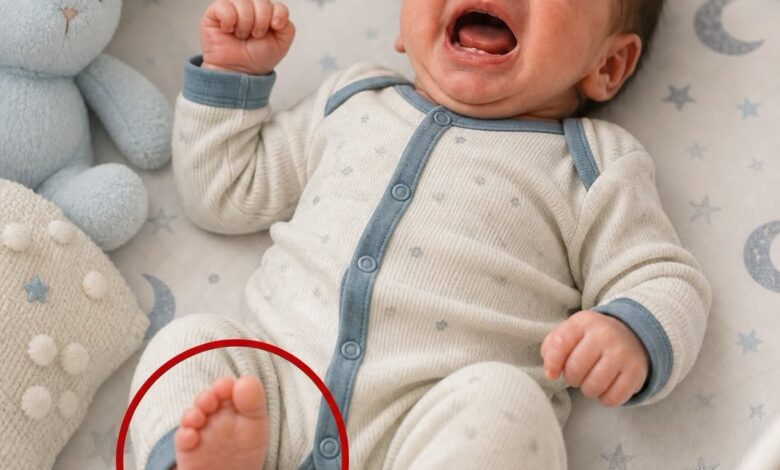
They later learned the term: hair tourniquet syndrome. A single strand of the mother’s hair, likely shed during postpartum hair loss, had twisted between the baby’s toes and tightened with every tiny movement. It cut so deeply into the soft skin that it blocked circulation and began to disappear beneath the swelling. No one at the clinic had checked his feet. Everyone had focused on the crying, not its cause.
Surgeons carefully removed the embedded hair under magnification, restoring blood flow just in time. The baby’s toes slowly regained color; the risk of amputation passed. Shaken, the parents replayed every moment, realizing how easily they had trusted the first explanation. Now the father tells their story to every new parent he meets: when a baby cries inconsolably, strip them down, check every finger and toe, and never assume it’s “just colic” again.
The medical condition described in this story is real, but the account does not provide records that independently establish every detail of this particular family’s experience. Its practical value is as a reminder to take unexplained distress seriously, not as proof that the same cause explains another baby’s crying. A child who remains inconsolable needs an appropriate medical assessment.
Cleveland Clinic describes a hair tourniquet as a hair or thread tightly wrapped around a body part, often a finger or toe. Redness, swelling, and pain can develop, and a thin strand may be difficult to see. Restricted circulation makes prompt treatment important. A swollen or discolored digit, or a suspected strand that cannot easily be seen and removed, warrants urgent professional help.
Do not dig into the skin, cut blindly with scissors, or delay care while attempting repeated home remedies. A clinician can assess the circulation and choose a removal method appropriate to the situation. The treatment used in one story is not a set of instructions for another child. Even after removal, a professional may need to check whether tissue has been injured.
Crying itself has many possible explanations. The NHS advises obtaining medical help if a baby cannot be consoled or the crying sounds unusual, particularly when other concerning symptoms are present. Breathing difficulty, unusual floppiness, poor responsiveness, or a serious change in the baby’s condition should prompt emergency help. Checking fingers and toes is useful, but finding nothing there does not rule out another problem.
For a worried caregiver, it can help to describe the situation plainly: when the crying began, whether the baby is feeding, what seems different, and what has already been tried. If symptoms continue after an earlier assessment, explain that they have persisted and ask for reassessment. This is not a matter of assigning blame; it is about responding to the child’s current condition.
The takeaway should be awareness rather than fear. Routine attention to loose hairs and threads can be part of ordinary care, while professional help remains essential when pain, swelling, or persistent unexplained crying appears. No parent should be expected to make a difficult diagnosis from an online story alone.
Cleveland Clinic on hair tourniquets · NHS guidance on a crying baby