BREAKING NEWS confirms that the Earth will begin to See more
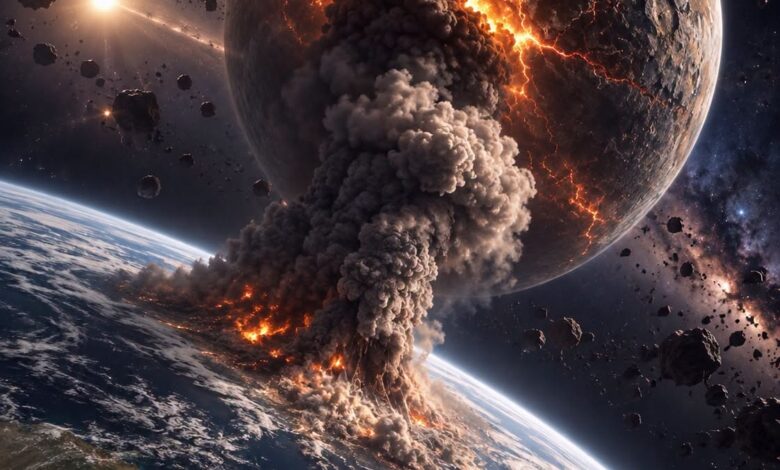
The warning arrived softly, but the implications did not. A mountain-sized asteroid is slicing through space, officially “no real danger,” yet vast enough to erase cities and stain skies for years. Experts sound calm. Instruments hum. Calculations reassure. And still, a single question burns underneath the comforti… Continues…
An asteroid like 52768 (1998 OR2) is both a scientific object and a mirror. On paper, it is just mass, velocity, and orbit, a predictable traveler passing at a safe distance this time. But in its shadow lies the uneasy recognition that our planet lives by probabilities and preparation, not guarantees. The same data that tells us we’re safe today also reminds us how narrow that safety margin really is.
Our protection depends on telescopes that must notice the threat early enough, on engineers who must design the impossible under pressure, and on governments that must agree before the clock runs out. No single failure has to be malicious; it can be as simple as a delayed budget, a missed observation, or a debate that drags on too long. This asteroid will pass quietly. The next one may demand an answer we are not yet ready to give.
Asteroid 52768, also known as 1998 OR2, is a large near-Earth object that astronomers have tracked for decades. Its orbit brings it into the broad category of objects that deserve continued observation, but a close astronomical pass is not the same as a predicted collision. Distances described as close in space can still amount to millions of kilometers.
NASA and other observatories calculate an asteroid’s path using repeated measurements. As more observations are collected, uncertainty narrows and scientists can project future approaches more accurately. If an object presented a meaningful impact probability, agencies would publish the date, estimated size, uncertainty, and risk level rather than announce vaguely that Earth would “start to” experience something.
The 2026 wording in the viral caption is therefore misleading without a specific event attached to it. Earth is continuously affected by ordinary astronomical processes, while small meteoroids enter the atmosphere every day. A monitored asteroid passing safely does not mean a new planetary condition has begun.
Planetary defense work remains important even when a particular object poses no immediate threat. Astronomers search for undiscovered near-Earth objects, refine their trajectories, and test methods for changing an asteroid’s course. NASA’s DART mission demonstrated that a spacecraft impact could alter the orbit of a small asteroid moon, providing practical data for future defense planning.
Preparedness also includes communication. Clear risk scales and public databases help prevent routine observations from becoming panic. Images of large rocks and countdown language may generate attention, but they should be compared with official orbital information.
The responsible conclusion is that 1998 OR2 remains an object scientists watch and study. Current tracking allows its approaches to be calculated well in advance, and a monitored pass should be described with its actual distance and risk assessment. The existence of a planetary defense program shows preparation, not evidence that impact is imminent.