Michael Jacksons Daughter Paris Jackson Building Her Own Identity Beyond a Legendary Legacy
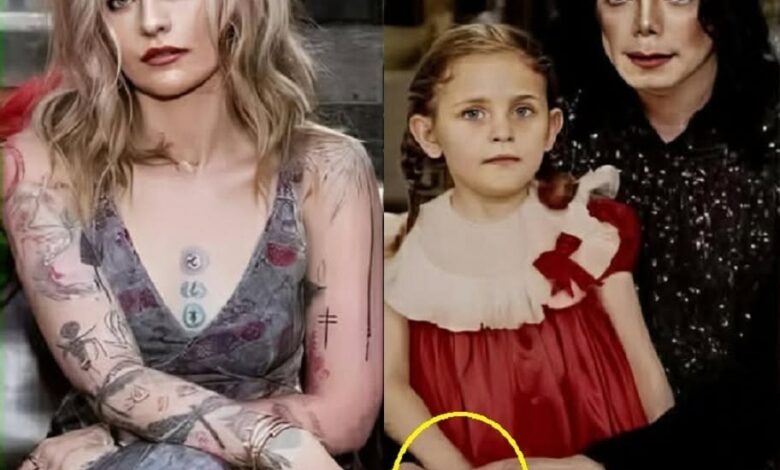
Being the daughter of one of the most famous entertainers in history comes with a kind of attention few people could ever fully understand.
For Paris Jackson, growing up as Michael Jackson's daughter meant living with a name recognized almost everywhere in the world. It brought extraordinary opportunities, but it also meant intense public curiosity, constant comparisons, and expectations that began long before she was old enough to decide what kind of life she wanted for herself.
Over the years, however, Paris has increasingly worked to establish an identity that is distinctly her own.
Rather than simply following the musical path created by her father, she has explored modeling, acting, songwriting, and advocacy. Her creative choices have often reflected a desire for independence and authenticity rather than an attempt to recreate the enormous commercial success associated with the Jackson name.
Her journey has not always been easy. She has spoken publicly about grief, mental health struggles, fame, and the difficulty of growing up under extraordinary circumstances. At the same time, she has continued to create, perform, and search for a life that feels meaningful to her.
Her story is therefore about more than celebrity.
It is about what happens when someone born into a legendary family tries to answer a deeply personal question:
Who am I when the world already thinks it knows who I am?
Paris-Michael Katherine Jackson was born on April 3, 1998, the daughter of Michael Jackson and Debbie Rowe.
From birth, she belonged to one of entertainment's most recognizable families. Her father was not simply a successful recording artist. By the time Paris was born, Michael Jackson had spent decades as one of the most famous performers on the planet.
That level of fame inevitably affected his children's childhood.
Michael made significant efforts to protect Paris and her brothers from photographers and public attention. During public appearances when they were young, the children were sometimes seen wearing masks or other coverings over their faces.
To outsiders, those images became another source of fascination surrounding Michael Jackson.
For the children themselves, however, the intention appeared to be much simpler: privacy.
Paris has subsequently described her father as a devoted parent who attempted to expose his children to different cultures and experiences while also teaching them about the realities of the world outside celebrity life.
But even the strongest efforts at privacy could not completely separate the Jackson children from their father's fame.
And in 2009, everything changed.
Michael Jackson died on June 25, 2009. Paris was only 11 years old.
Millions of fans mourned the death of a global superstar, but for Paris and her brothers, the loss was fundamentally different. The person being discussed on television around the world was their father.
At Michael Jackson's public memorial service in Los Angeles, Paris stepped toward the microphone and delivered a few emotional words about him.
For many people, it was the first time they had heard her speak publicly.
The moment was brief, but it became one of the most remembered scenes from the memorial. Behind all the headlines about record sales, concerts, controversies, and celebrity, the world suddenly saw a grieving child.
That distinction would remain important throughout Paris's life.
To millions of people, Michael Jackson represented music history.
To Paris, he was Dad.
Grieving such a loss is difficult under any circumstances. Doing so while the world continues to discuss, analyze, celebrate, criticize, and debate the person you lost creates an additional burden that few people experience.
As Paris grew older, she faced that grief while also navigating adolescence under intense media attention.
Paris has spoken candidly in interviews about experiencing serious emotional struggles during her teenage years.
Her openness about mental health has become an important part of her public identity. Instead of presenting her life as an effortless story of privilege, she has acknowledged that wealth and fame do not automatically protect a person from pain.
This is an important distinction.
From the outside, celebrity families can appear to have everything: financial security, extraordinary homes, access to opportunities, and connections that most people could never imagine.
But grief does not disappear because someone is famous.
Neither does loneliness, confusion, insecurity, or trauma.
For Paris, adolescence was also a period when public interest in her identity increased. Every appearance, friendship, relationship, outfit, and career decision had the potential to become a headline.
Eventually, she received treatment and began working toward greater stability.
The process of healing was not presented as a single dramatic transformation. Instead, Paris's later interviews have suggested something more realistic: recovery can be complicated, personal, and ongoing.
As she moved into adulthood, creativity increasingly became one of the ways she expressed herself.
And that creativity would take several different forms.
When Paris began pursuing professional opportunities as an adult, she did not limit herself to a single field.
She entered modeling, explored acting, and eventually became increasingly serious about music.
Each of these paths carried an unavoidable complication.
No matter what she accomplished, her father's name would appear somewhere in the story.
"Michael Jackson's daughter" was an easy headline.
Becoming simply "Paris Jackson" would require time.
Paris signed with IMG Models in 2017, marking an important step into the fashion industry.
Her appearance immediately made her distinctive.
With her numerous tattoos, striking features, and preference for an often bohemian-inspired aesthetic, Paris did not necessarily resemble the carefully manufactured image traditionally associated with celebrity offspring entering fashion.
Instead, her style frequently appeared personal and eclectic.
Fashion gave her a visual form of self-expression.
Her tattoos became particularly recognizable. Rather than hiding them, she often incorporated them into her public appearance. Over the years, they have reflected different influences, experiences, interests, and personal meanings.
She also appeared in major fashion and entertainment publications and attended high-profile industry events.
Yet modeling was only one part of her developing career.
Paris also explored acting.
Her screen credits have included television and film projects, allowing her to work in an industry that was connected to entertainment but distinct from her father's primary legacy.
Acting presented another opportunity to establish herself through work rather than simply through family history.
Like many performers developing their careers, she took on different kinds of roles rather than immediately attempting to position herself as a major Hollywood star.
That approach seemed consistent with the larger pattern of her career: experimentation rather than imitation.
But music would inevitably attract the greatest comparisons.
For the daughter of Michael Jackson, choosing to become a musician was almost guaranteed to generate enormous expectations.
Michael Jackson's influence on popular music is difficult to overstate. His performances, videos, albums, choreography, and visual presentation shaped generations of artists.
Any child of his entering music would immediately face comparisons.
Paris nevertheless chose to make music—but not by attempting to become a female version of her father.
Her musical interests moved in a different direction.
She formed The Soundflowers with musician Gabriel Glenn, and the duo released a self-titled EP in 2020. The project leaned toward acoustic, folk, and alternative influences rather than the pop, funk, dance, and R&B sounds most closely associated with Michael Jackson.
Paris later continued developing her work as a solo artist.
The difference in style matters because it reflects something central to her identity.
She did not appear interested in competing with her father's legacy.
Trying to reproduce Michael Jackson's career would have been virtually impossible—and artistically limiting.
Instead, Paris's music has tended to emphasize vulnerability, introspection, guitar-driven arrangements, and emotional storytelling.
Her approach communicates a simple idea:
She can inherit a love of music without inheriting the obligation to make the same music.
That distinction may be one of the most important elements of her artistic development.
Paris has never pretended that Michael Jackson's influence disappeared from her life.
His memory remains visibly important to her.
She has honored him through tattoos and public tributes and has spoken repeatedly about the relationship they shared.
At the same time, honoring a parent does not require becoming that parent.
This is where Paris's story becomes relatable even beyond the extraordinary circumstances of celebrity.
Many people grow up carrying expectations created by their families.
Some inherit a family business.
Others feel pressure to enter the same profession as a parent.
Some are expected to behave a certain way because of their surname, culture, community, or upbringing.
Paris's version of that struggle happens on an unusually public scale.
Her father's legacy is enormous and permanent. Michael Jackson's music continues to be played around the world, and discussions about his life continue long after his death.
Paris cannot separate herself completely from that history.
Nor does she appear to want to erase it.
Instead, the challenge has been learning how to carry that history without allowing it to become her entire identity.