I Broke My Arm and Asked My Husband to Help with Our 5 Month Old Twins, but He Said, Moms Dont Get Sick Days So I Taught Him a Lesson Hed Never Forget
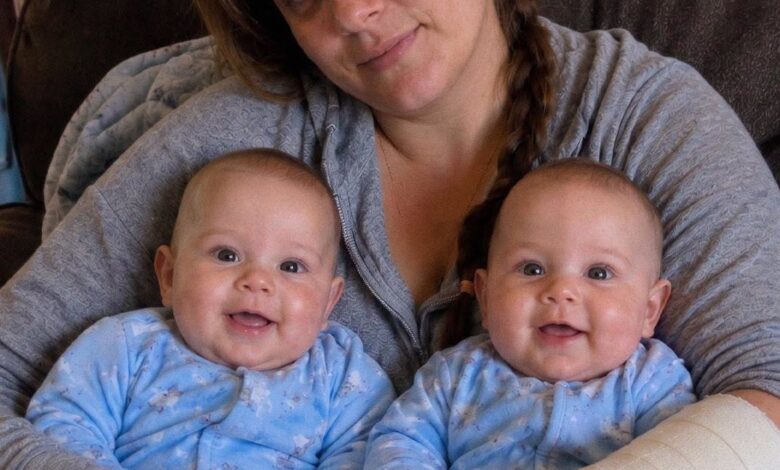
“Hope?” Derek said my name as he stopped in the doorway of my mother’s living room. Luke was in her arms, Miles was in mine, and the diaper bag beside us clearly held more than an evening’s supplies.
He wanted to know why the boys were staying there.
My broken arm was the answer, but he looked as if I had done something to him. His eyes moved to the folded schedule on the coffee table, the same schedule he had refused to follow. He demanded that I bring his children home.
Our children, I reminded him.
For five months, I had anticipated every need before Derek even noticed there was a problem. Breaking my arm had finally made it impossible to keep doing his half as well as mine.
Two days before I went to Mom’s, I was on the nursery floor trying to fasten Luke’s sleeper with my left hand. My right arm was in a cast. Miles was fussing, and my tea sat untouched on the changing table.
Derek stepped around a laundry basket, loosened his tie, and asked what was for dinner.
I reminded him that I had fallen down the stairs the previous day. The doctor had told me not to lift the babies with my fractured arm while it healed. I had hoped that an injury might prompt him to cook, order something, or simply notice that I needed help.
Instead, he told me he had worked ten hours.
When I asked him to pick up Miles, he checked his phone. He had not changed clothes yet. Then he said he paid the bills and did not intend to come home for another shift.
Fatherhood, apparently, was overtime.
I suggested practical changes for the next few weeks: coming home an hour earlier when possible, taking an available day off, or asking whether he could sometimes work from home. He answered that he had a job. I reminded him that I had one too before maternity leave.
He said I was better with the boys. I told him that doing the work was how I had learned.
When Miles cried harder, Derek asked why I could not manage with my other arm. Then he claimed I had been the one who wanted children.
We had planned the pregnancy together. Before I was even pregnant, he had shown me nursery ideas.
None of that stopped him from saying mothers did not get sick days. When I explained that I was injured, he said it was not his problem and walked away.
Luke caught the edge of my cast while Miles kept crying. I freed myself carefully and reassured them. I had been saying I had everything under control for so long that I barely noticed how untrue it had become.
My mother, Noelle, came the following afternoon. She found me wiping spilled formula from the counter and took the cloth out of my hand.
She knew I cleaned when I was overwhelmed. She also found the tea I had already reheated twice and made me a fresh cup. When I insisted I was fine, she recognized the voice I used when I was trying to hide how badly I needed help.
She did not lecture. She cared for the boys, washed bottles, made dinner, and stayed until after we ate.
That night, Miles woke first and Luke followed. I nudged Derek and asked him to take Luke. He rolled over and said he had to be awake for work in four hours.
So did I.
He told me I could sleep when the babies slept. I got up while he pulled the blanket over his shoulder.
Three nights later, Mom’s car would not start. She warned me not to attempt bathing the twins alone. I promised to wait for Derek.
When he arrived, I asked him to handle their baths. He told me to skip them, then suggested a washcloth as if I had never considered how to care for my own children. He complained about working all day.
When I said I had been working too, he told me I stayed home doing nothing.
This time, I stopped trying to persuade him. My calm unsettled him more than an argument would have. He was used to me talking until everyone felt better, usually at my expense.
After the boys slept, I rested my aching arm on a folded towel and wrote down what I could not safely manage: baths, evening bottles, carrying them upstairs, and one nighttime waking.
The next evening, I put the list in front of him. It was a plan for the weeks while I healed, not a request for special treatment.
He pushed it away. He would not do shifts in his own house.
I asked what he was willing to do instead. He had no answer. When I asked directly whether he would take over those tasks until I was cleared, he said no.
I finally stopped calling his refusal a misunderstanding.
In the nursery, I called Mom and asked whether the boys and I could stay for a few days. Her car was repaired, and she offered to collect us. When she asked whether I was leaving Derek, I told her I was trying to heal.
An hour later, Mom handled the babies while I packed. Derek emerged from the garage and protested when he realized we were going. I told him I had asked him to help me stay.
At Mom’s, the boys settled. Derek called and demanded that we return. Then he asked what people would think and what he should tell his mother.
I told him to describe what had actually happened: I had broken my arm, asked for help, and been told mothers did not get sick days.
He accused me of humiliating him. I realized he had not been embarrassed when he refused me. He was embarrassed that someone else might hear about it.
The next evening, he arrived angry because his mother had called. She had wanted to see us, and he had admitted we were not home. When he explained that he worked while I stayed with the twins, she asked why I had needed to leave our house to find help.
He had not known what to say.
Miles began crying, and Derek automatically looked toward me. I stayed seated and told him he could take him. He said he did not know what Miles wanted. I explained that I did not know yet either; I usually found out.
He lifted our son awkwardly and started pacing too fast. When he slowed, Miles gradually quieted.
Derek admitted that I made it look easy. I reminded him that he had called it nothing.
He finally acknowledged that feeling inexperienced had made him feel useless. Instead of learning, he had wanted me to stop asking. I told him fear did not excuse what he had said.
A few days later, he sent a photograph of our spotless kitchen and asked me to come home. I replied by asking when Miles usually had his last bottle.
He could not answer.
When he visited that evening, I told him I needed a partner, not another person waiting for me to assign tasks. He asked me to teach him. I nearly reached for another list, then stopped.
He needed to watch the boys, spend time with them, and learn them. He would make mistakes. So would I. But I would not drag him toward being a better father.
Over the following weeks, he began showing up without reminders. Twice a week, he left work on time. He put appointments in his own calendar. He learned that Luke settled against his chest and Miles often needed movement before sleep.
Three weeks later, my arm was healing well enough for me to bring some things home. I left other clothes at Mom’s. Derek noticed, and I explained that I was learning to trust myself enough to act sooner if the same pattern returned.
That night, Miles cried. Before I could rise, Derek was already heading toward the nursery. He recognized the tired cry.
A moment later, the sound softened.
I picked up my tea. It was still warm.
Being a good mother did not require proving how much I could survive. And being a father should never have depended on being repeatedly asked.